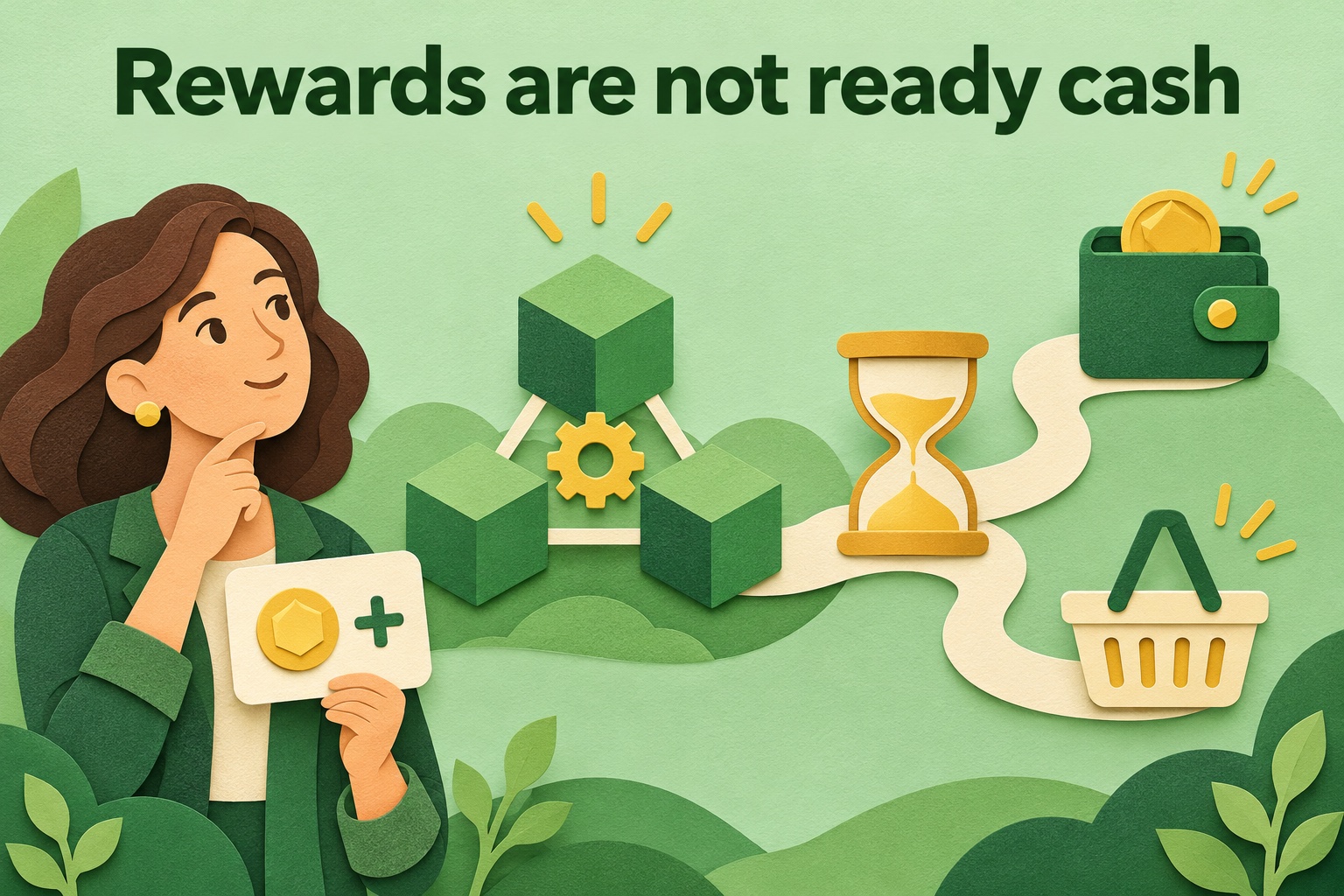
A staking reward can make your crypto balance grow while its value in euros falls. And a balance you can see is not always a balance you can spend today. Three questions help: what earns the reward, who controls the funds, and how do you get out?
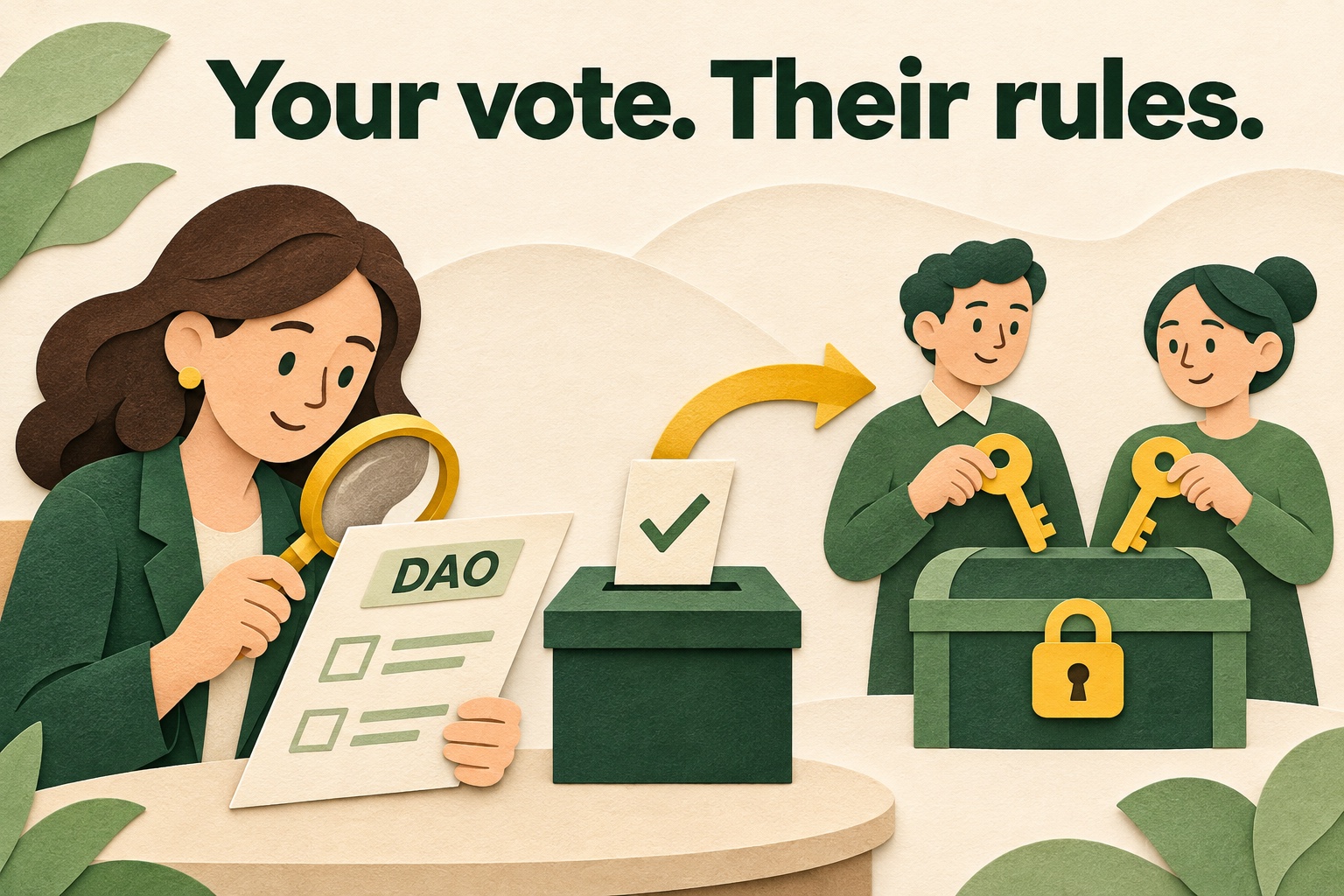
“The community decides.” That sounds as though everyone has equal influence. Yet one participant can outweigh a whole group. And winning a vote does not always mean anything has been carried out. Understanding these two differences helps you judge what your vote actually means.
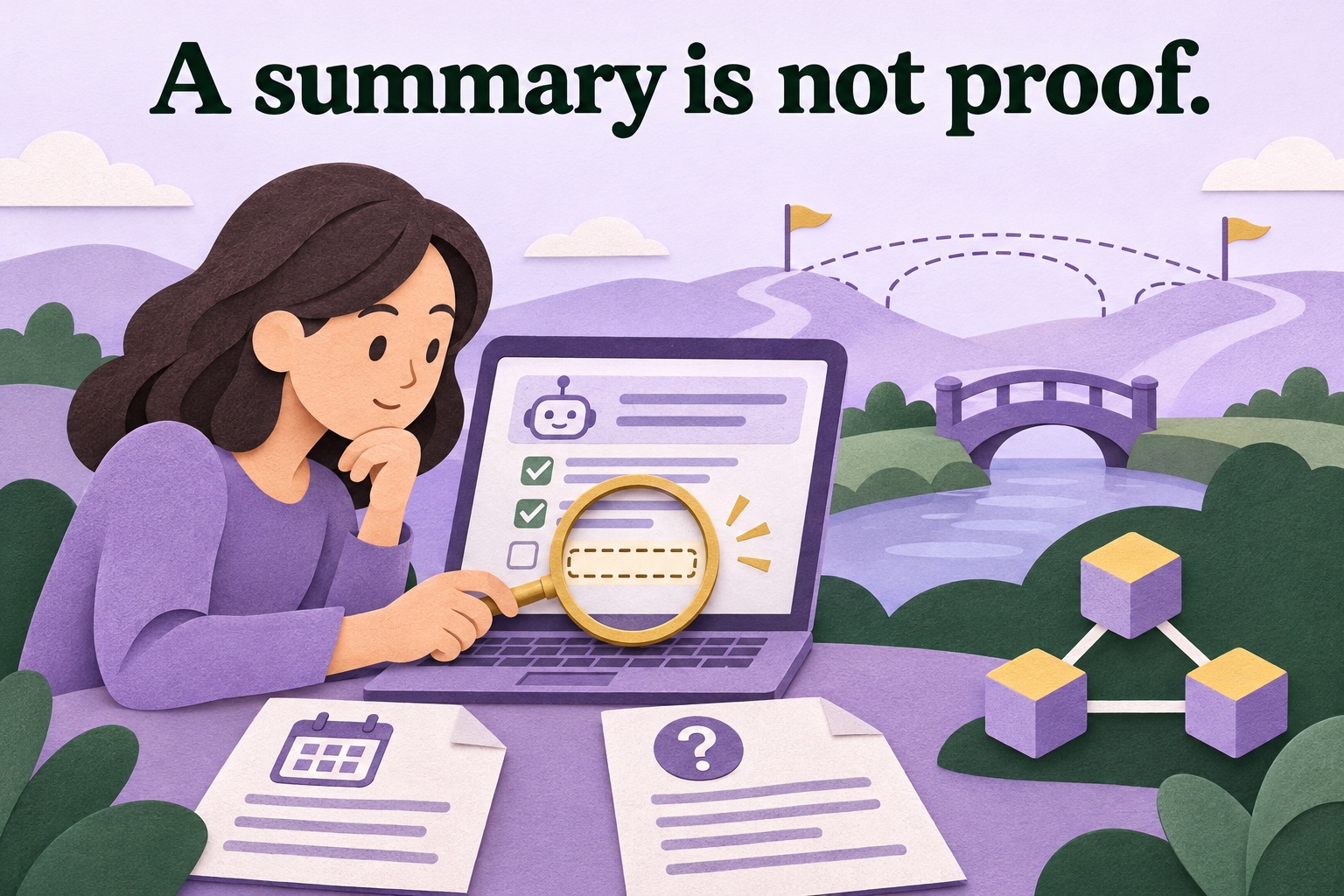
A long Web3 project document becomes a tidy answer in seconds. Useful, until “we plan to build this” becomes “this already works”. AI can help you read faster and ask better questions. To do that, its summary needs to keep limitations visible.
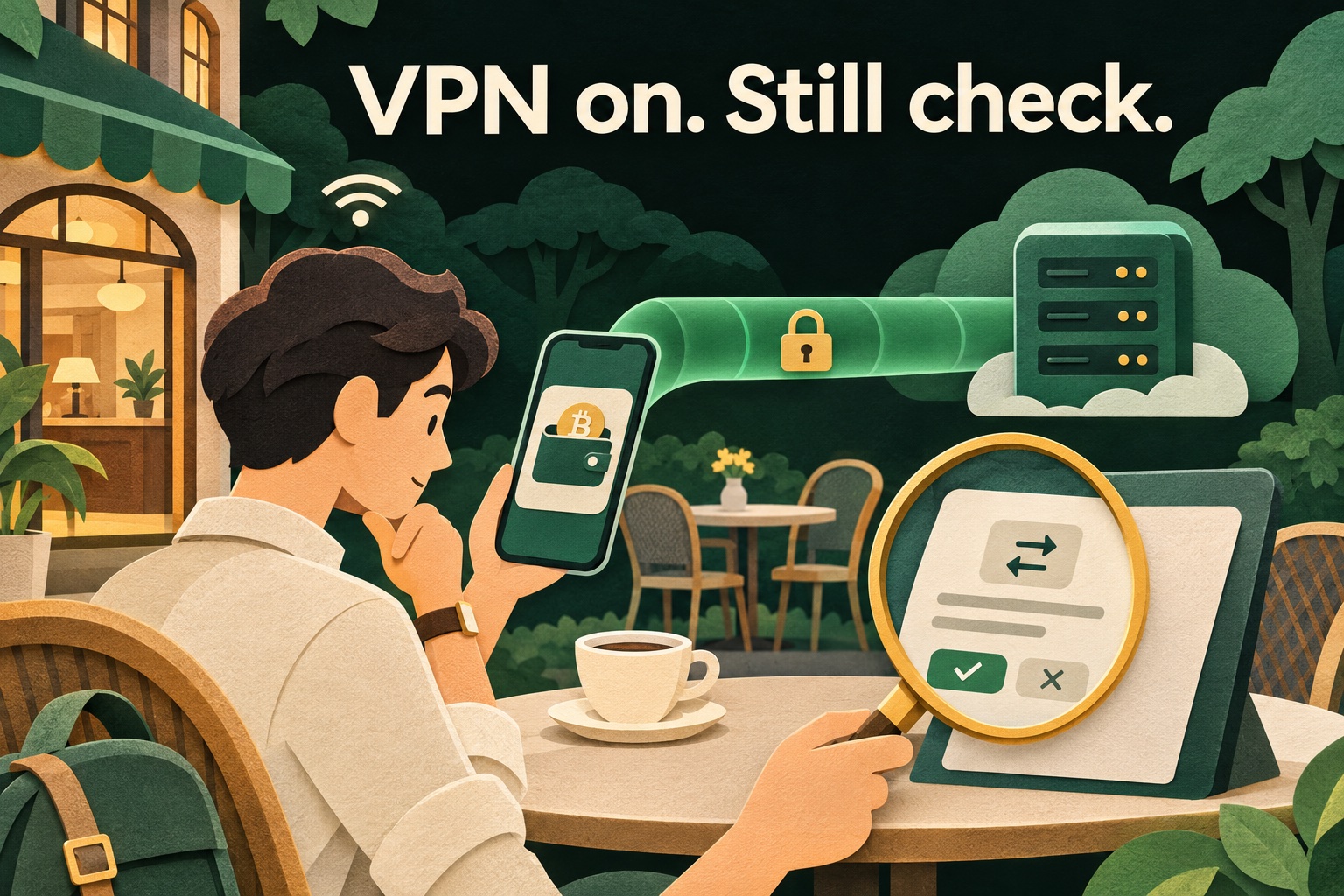
You are on hotel Wi-Fi and want to check your crypto account. A VPN can help with network privacy. But its green connection indicator does not tell you whether a website is trustworthy or a wallet request is sensible. Separate those checks to choose the protection you actually need.
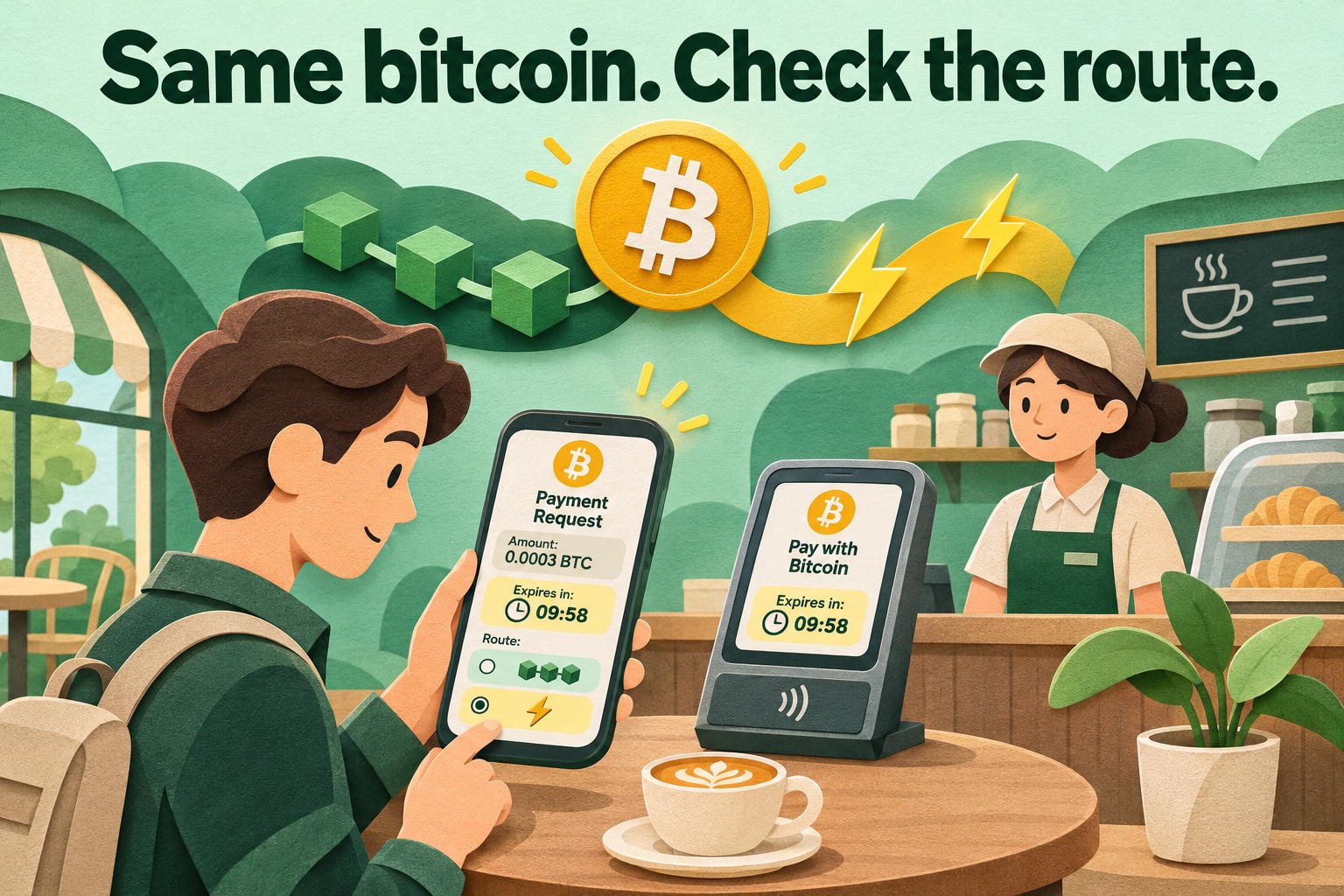
The counter says “Bitcoin welcome”. Your wallet offers Bitcoin and Lightning. They use the same currency, but not the same kind of payment request. Understand the distinction before scanning: a familiar name alone does not prove the payment route fits.
Your wallet holds exactly the same number of tokens. Yet exchanging them later may give you fewer euros. That does not necessarily mean the wallet is wrong. If you use a dollar stablecoin but pay bills in euros, two different values need to be kept apart.
You see a beautiful digital image and a button to buy its associated NFT. What can you actually do with that image afterwards? Your wallet alone does not answer the question. Understand the token, the file and the usage rights before you pay.
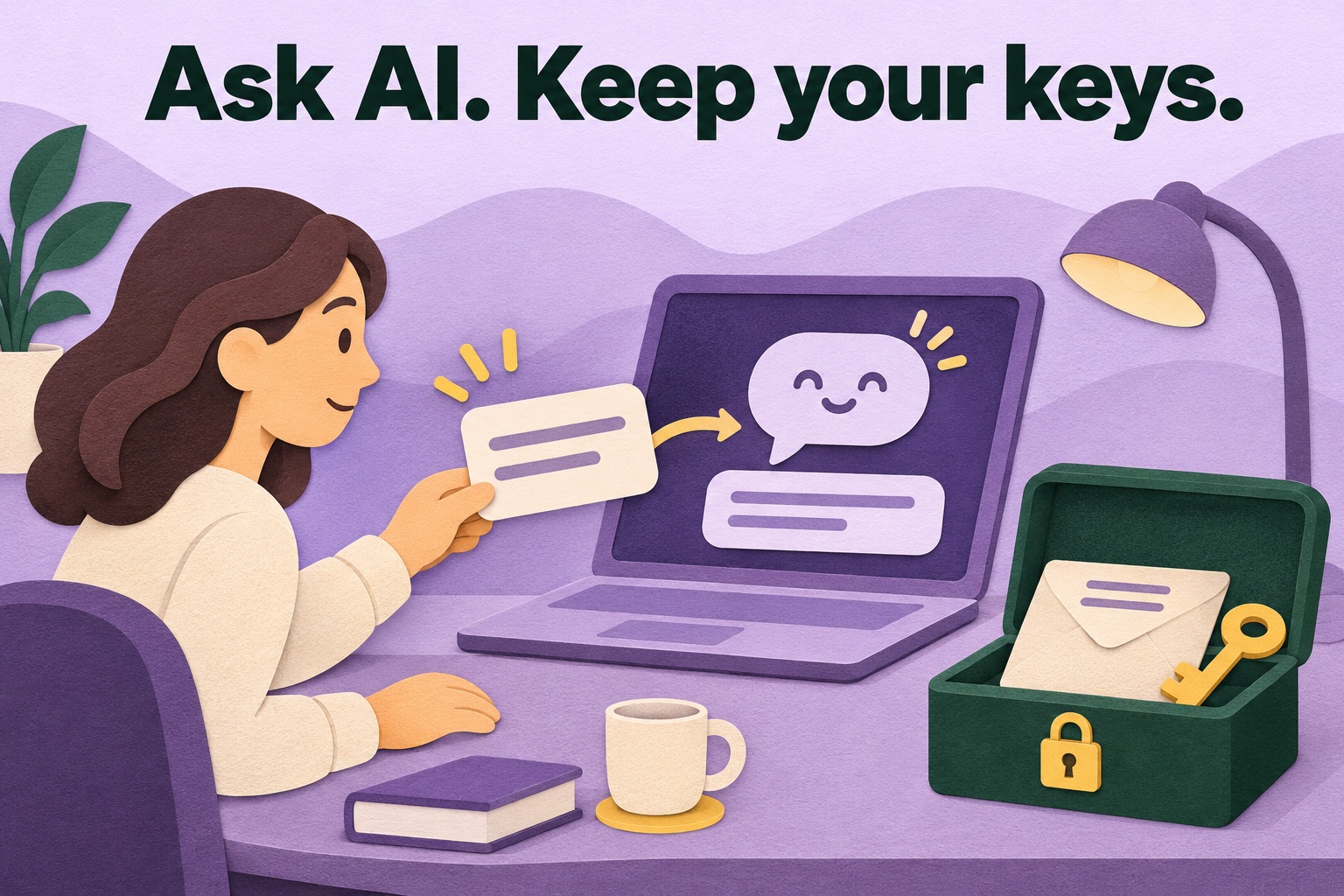
A wallet message you do not understand? AI can help explain the words. Sharing more data does not automatically bring better help. A few deliberate choices let you keep control of your information and stop a simple question becoming a new security problem.
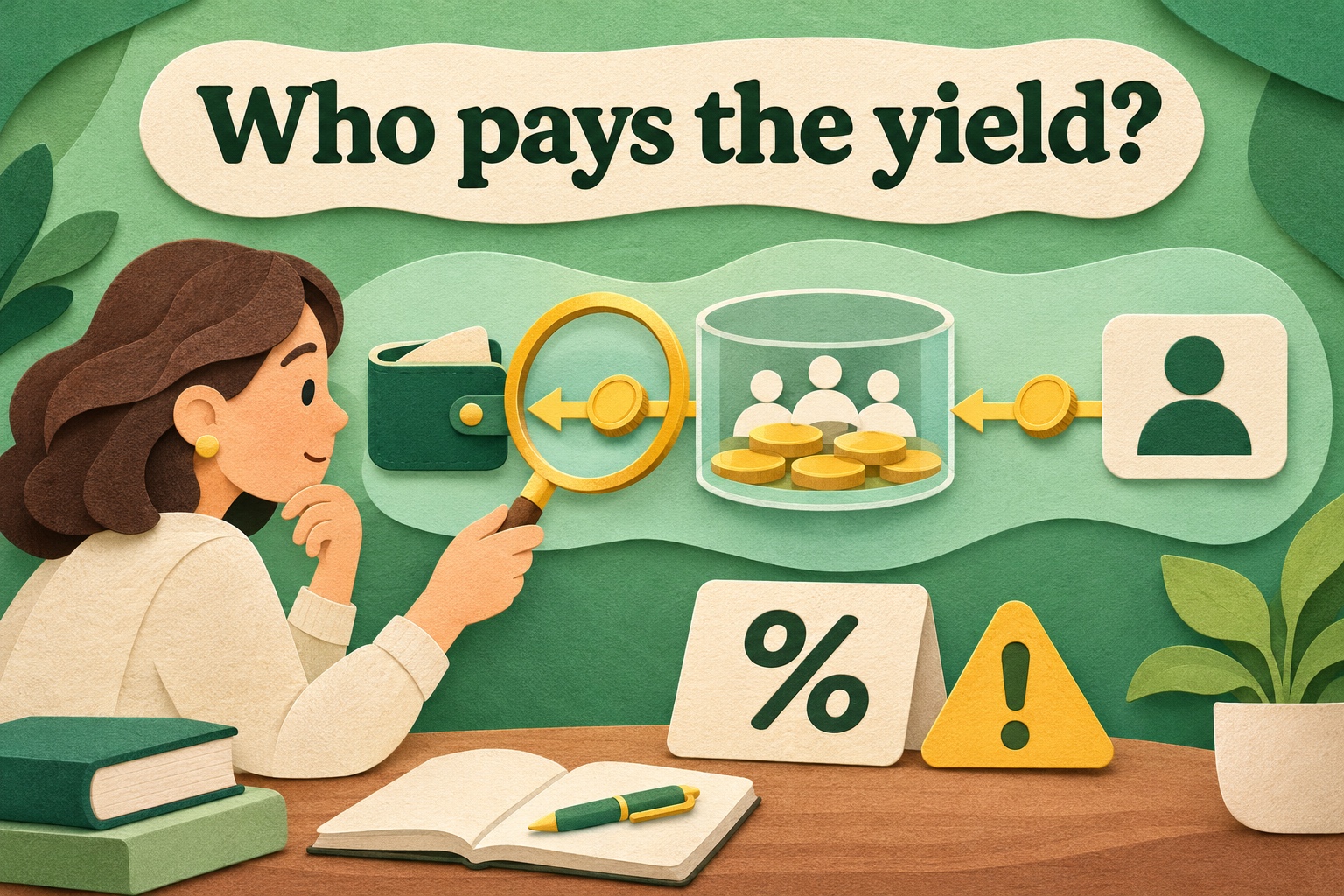
A percentage beside your crypto can look attractive. Before asking how much you might earn, try another question: where does that return come from? Understand who pays, what it costs and how you can leave. That helps you assess an offer without letting one large number make the decision for you.
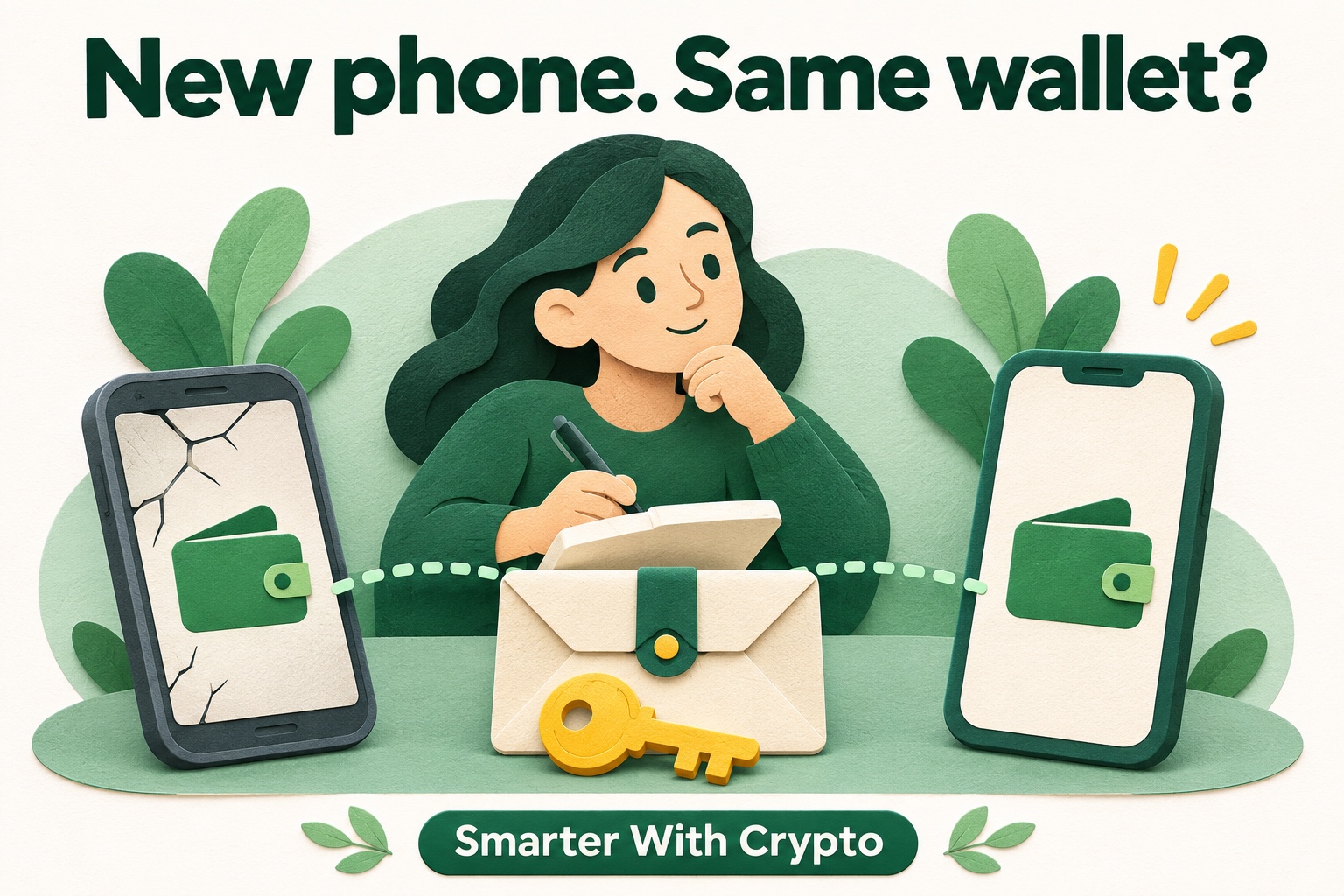
Your phone falls, its screen stays black and you cannot open your wallet app. Have you lost your crypto too? Not necessarily. What you prepared beforehand often makes the difference. A calm recovery plan helps you understand the access you need instead of guessing at the most stressful moment.
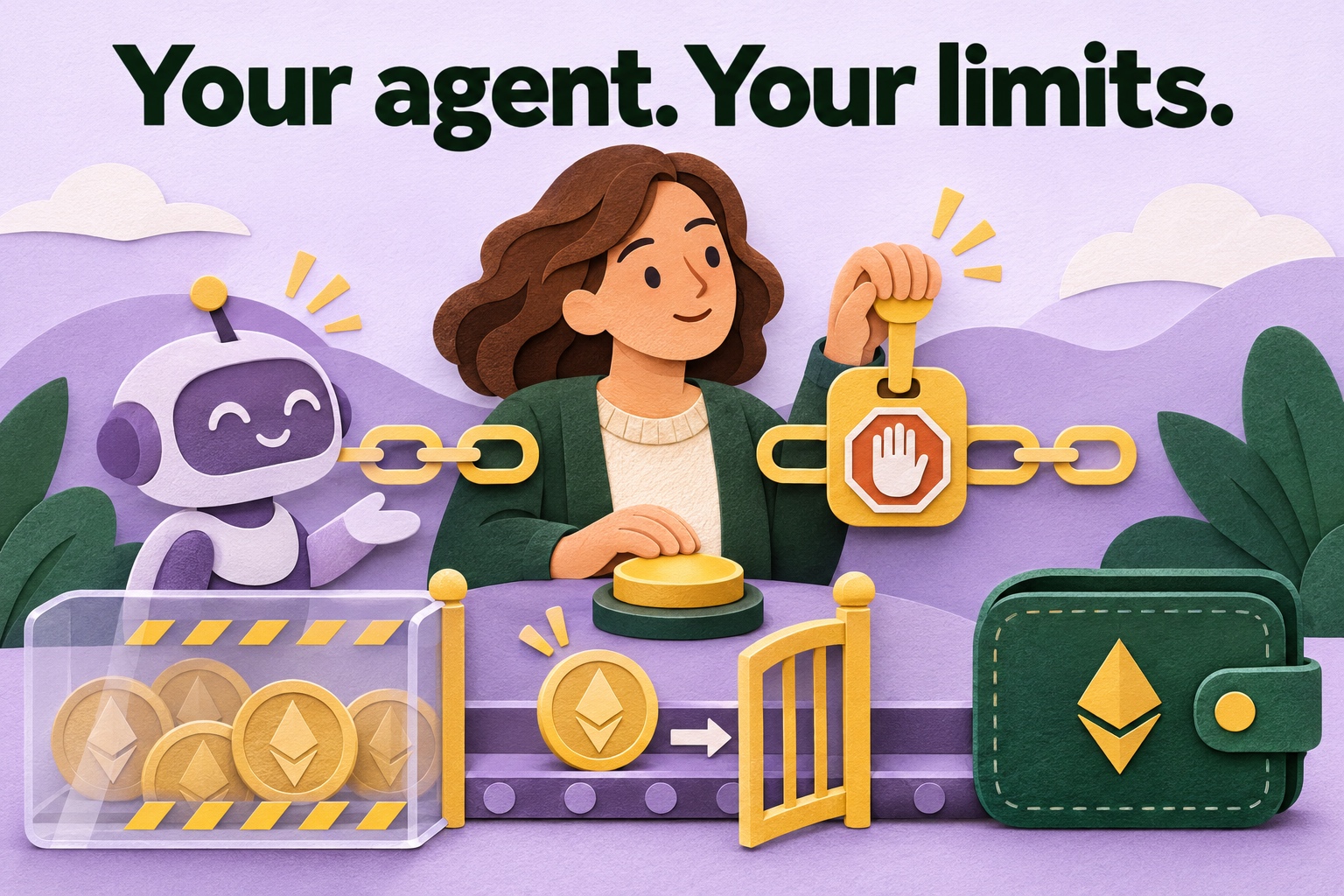
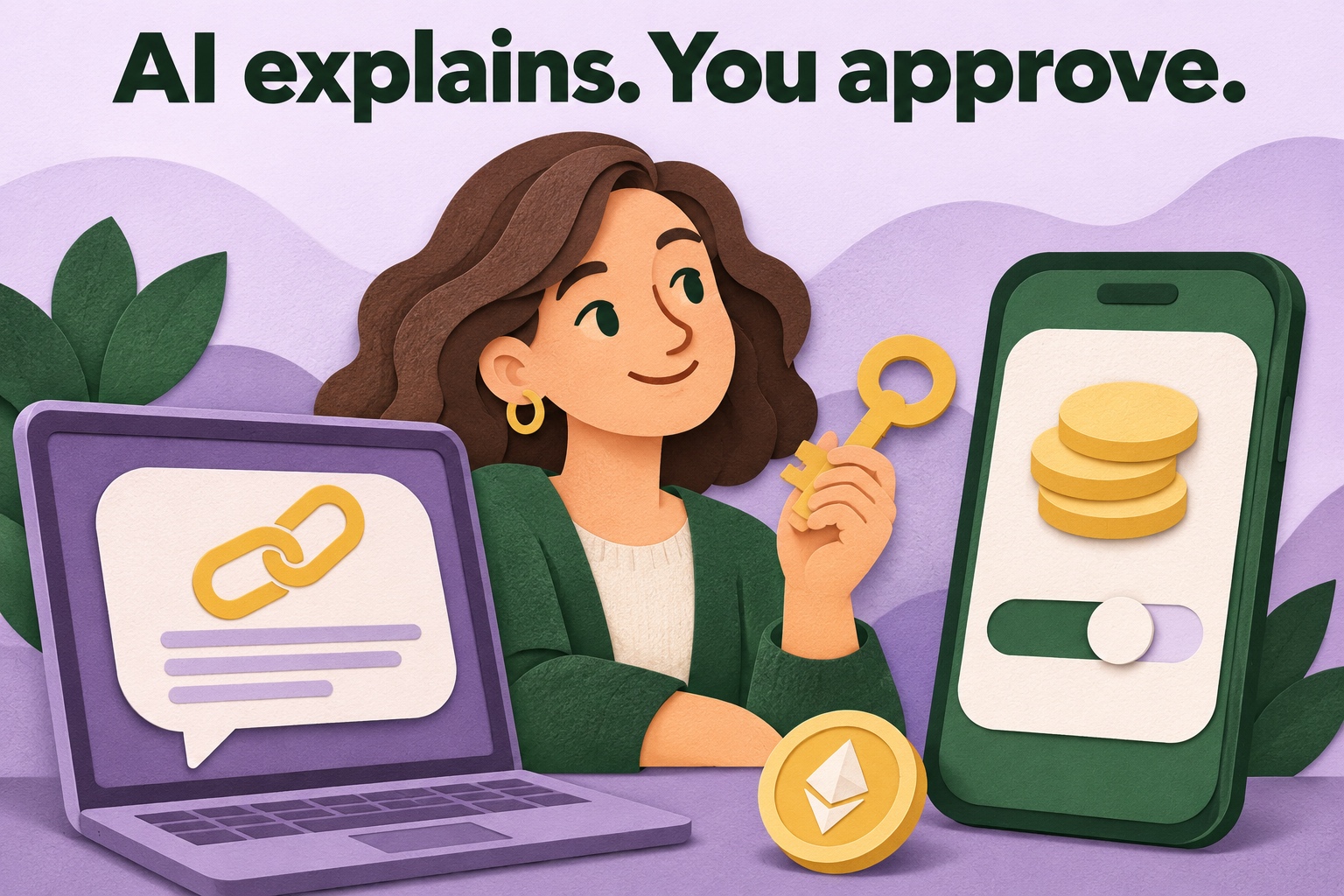
An AI assistant that explains something can be useful. An AI agent that also takes actions may save you work. Once a crypto payment is involved, however, the question changes: what authority are you giving it? Start with a useful task and check the boundaries before allowing money to move.
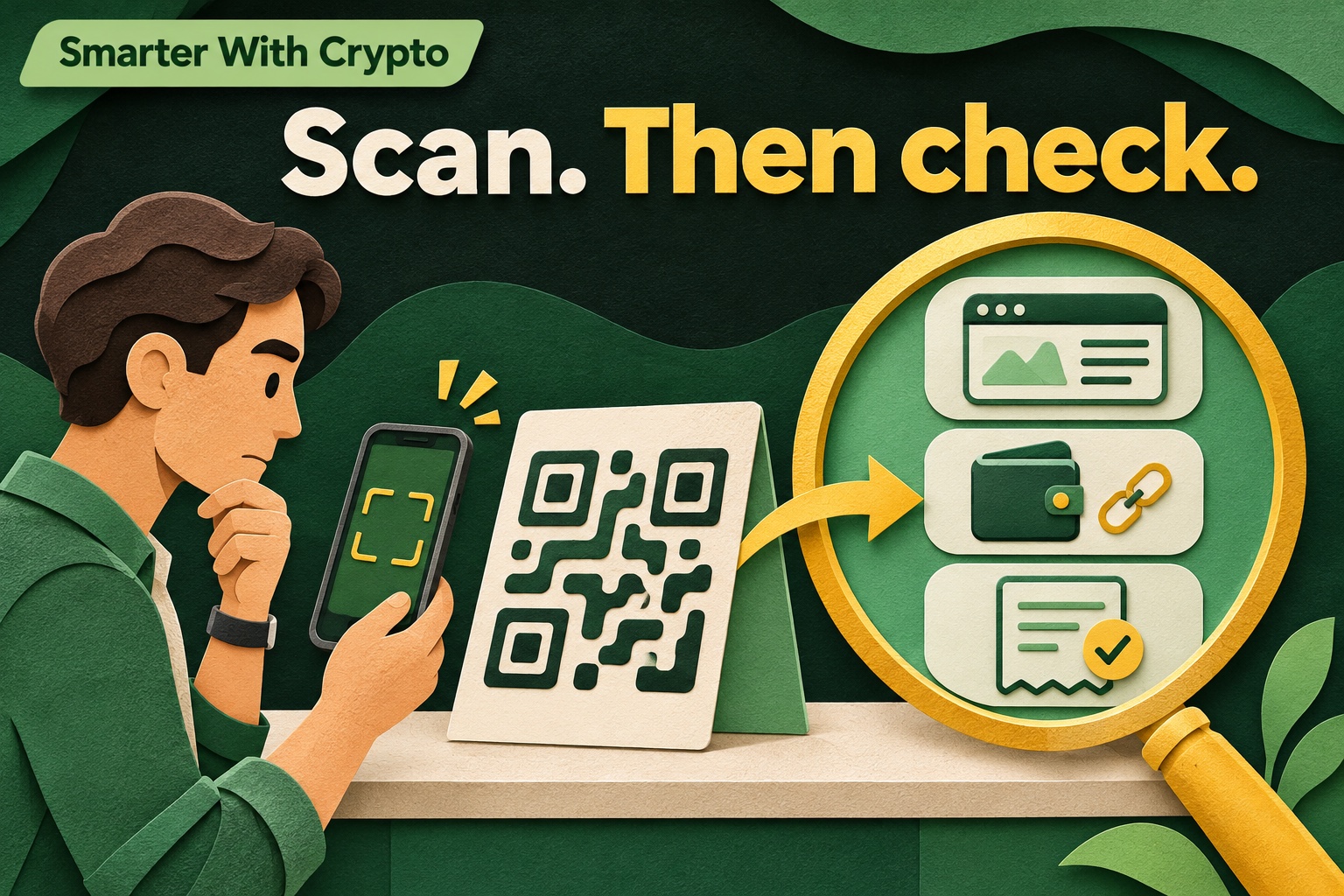
A QR code saves typing. Point your camera, tap the screen and you are somewhere else. That is useful, including with crypto. But the square does not tell you who is behind it or what you might allow next. Looking at the destination and then the request helps you stay in control of the next step.
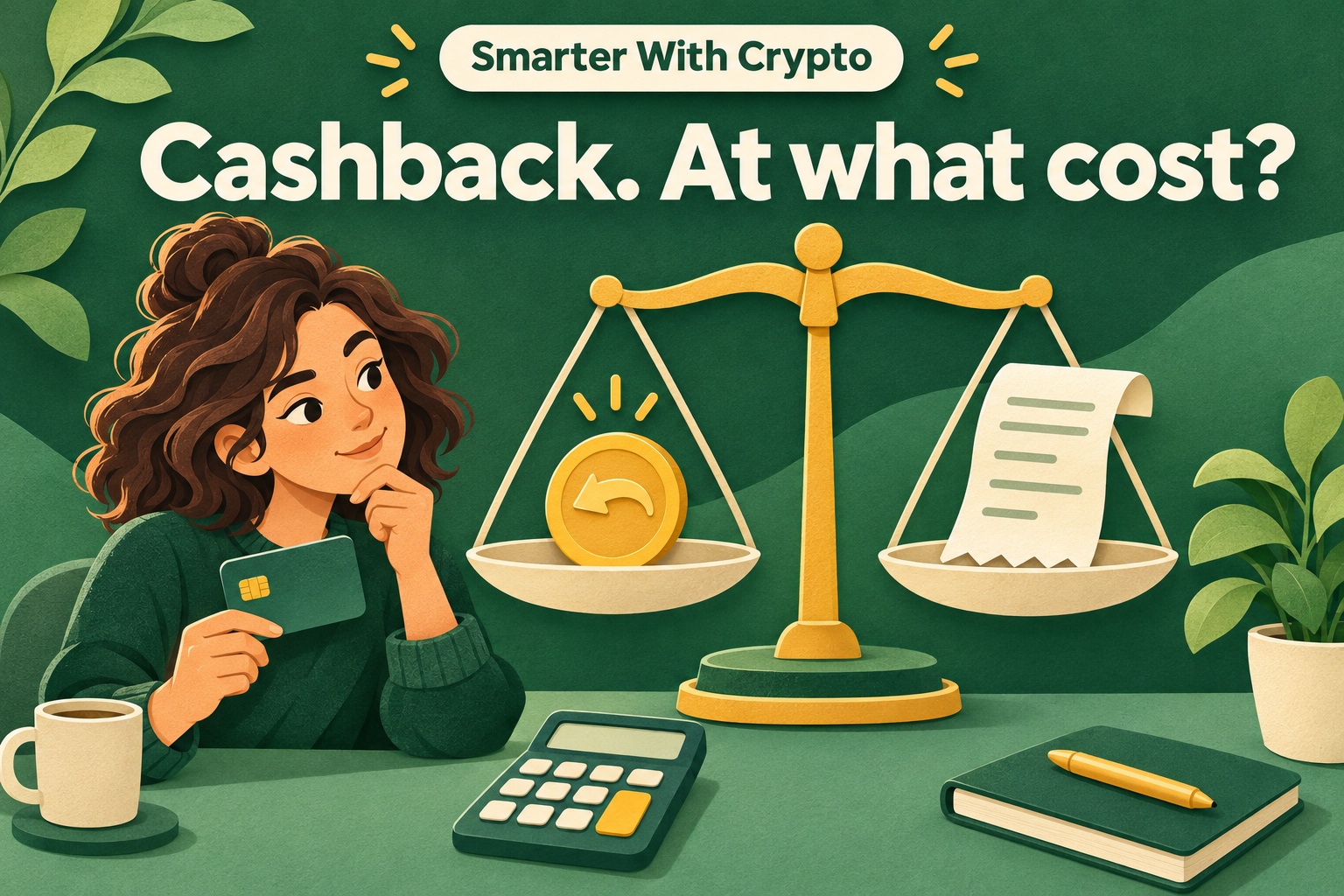
A crypto card offers a reward when you pay. That sounds appealing: you were buying groceries anyway, so why not get something back? But the large percentage does not tell the whole story. Looking at costs, conditions and the way you pay together helps you judge whether a reward really offers value. You do not need an expensive card or a complicated calculation to do that.
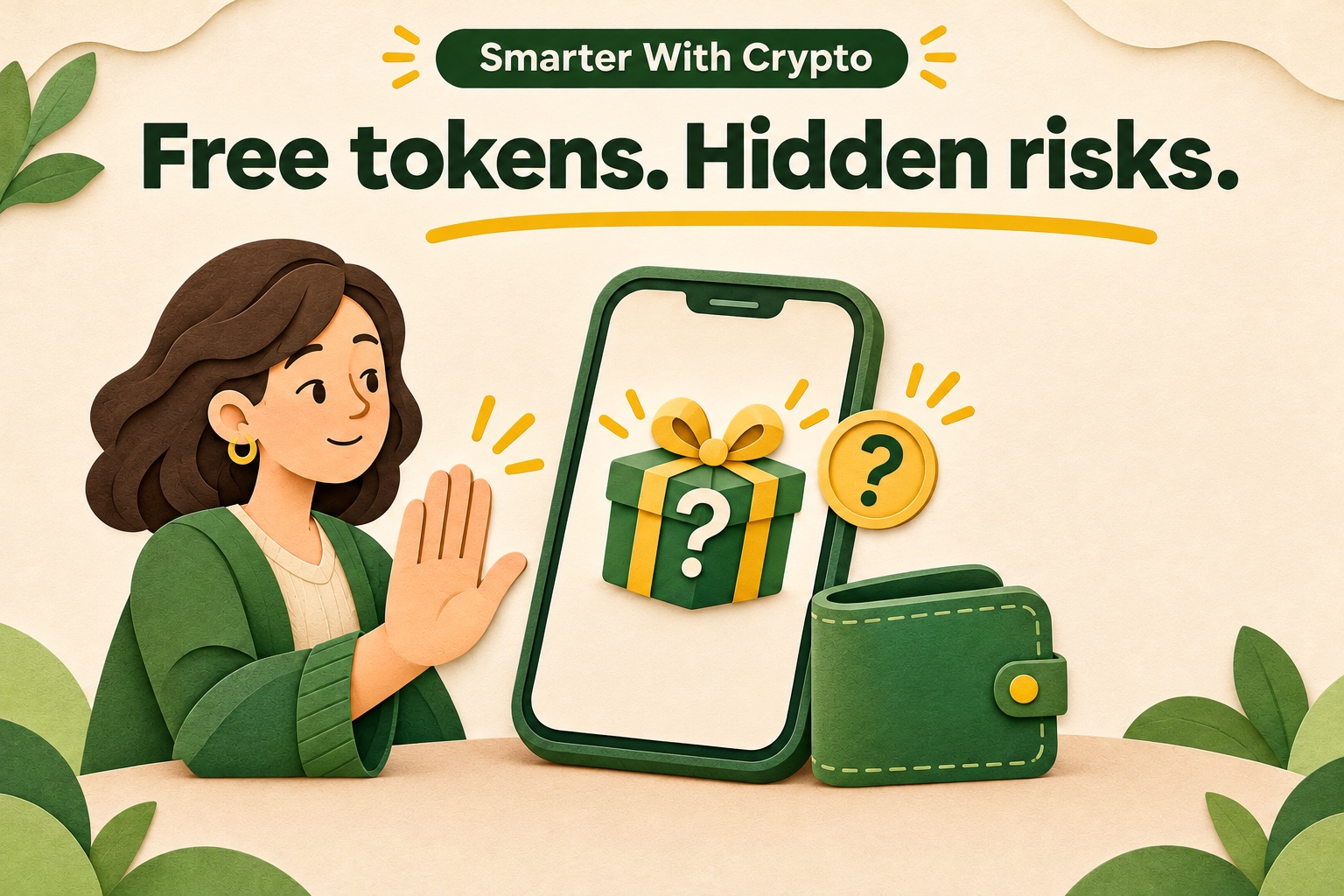
You open your wallet and spot a token you never bought. There may even be an impressive value beside it. It feels like a windfall. Yet the most useful first response is often to do nothing for a moment. Learn the difference between receiving something and granting permission, so an unexpected gift does not become an expensive click.
You want to try a Web3 service. Your wallet shows unfamiliar terms and an AI says you can proceed. That sounds convenient, but who is receiving which permission? Use AI to understand the request. Do not let a reassuring sentence make the decision about your money.
You see the same token name, perhaps even the same wallet address, on two networks. Moving across looks simple: copy the address and press Send. But that does not automatically move your crypto to the other network. Understanding the difference prevents a common mistake before money moves.
You can share a wallet address to receive crypto. That does not mean it belongs everywhere. An address, a transaction and your name can reveal connections you did not intend to share. A few simple choices help you decide what others really need to see.
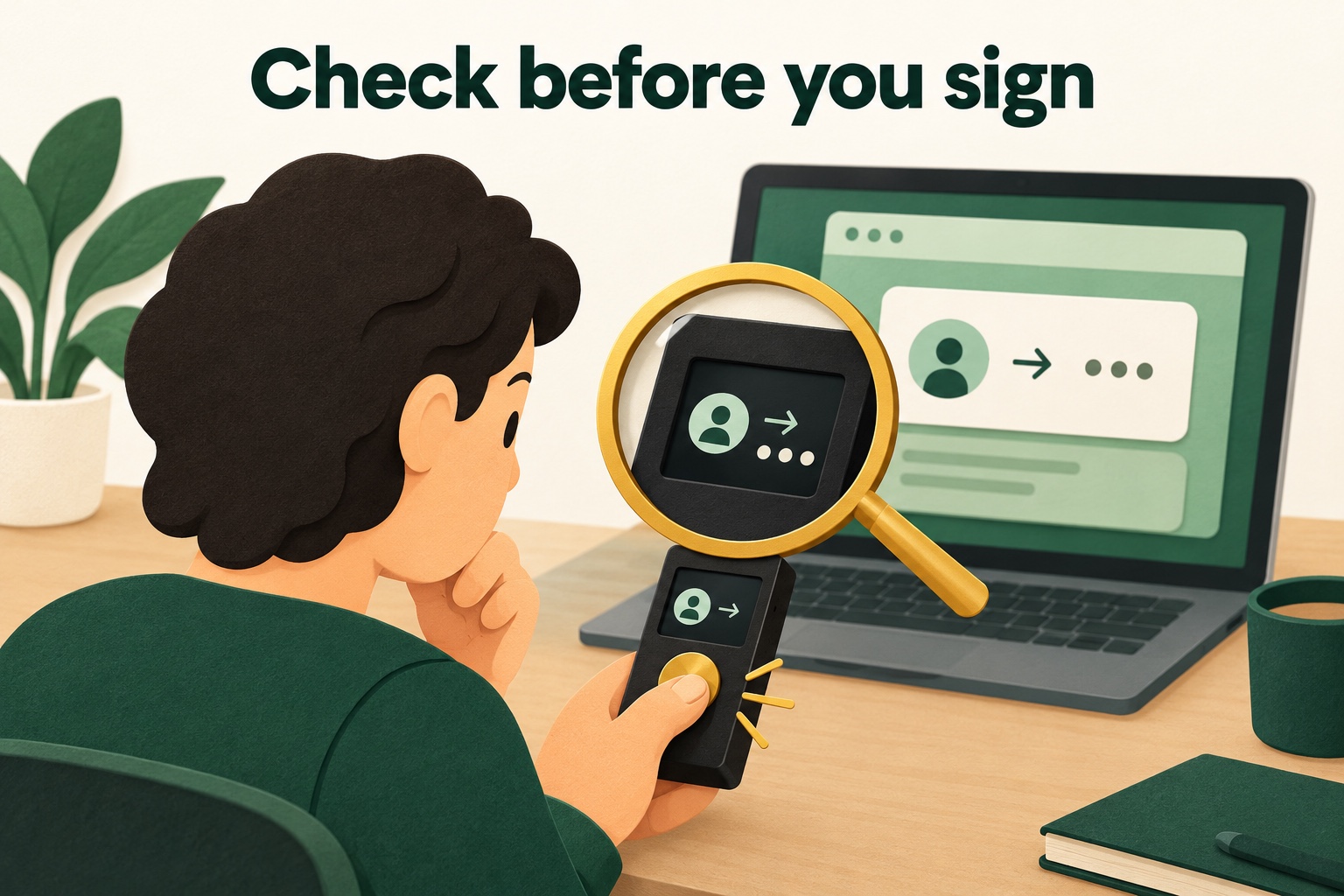
A hardware wallet can help isolate your keys. It does not know what you intended. Approving without looking can still authorise exactly the wrong action. That small screen deserves your attention.
Sending a small amount first sounds sensible. You would rather discover a mistake with little crypto than with a lot. But a successful test answers a limited question. Understand what you are checking before a green tick gives you too much confidence.
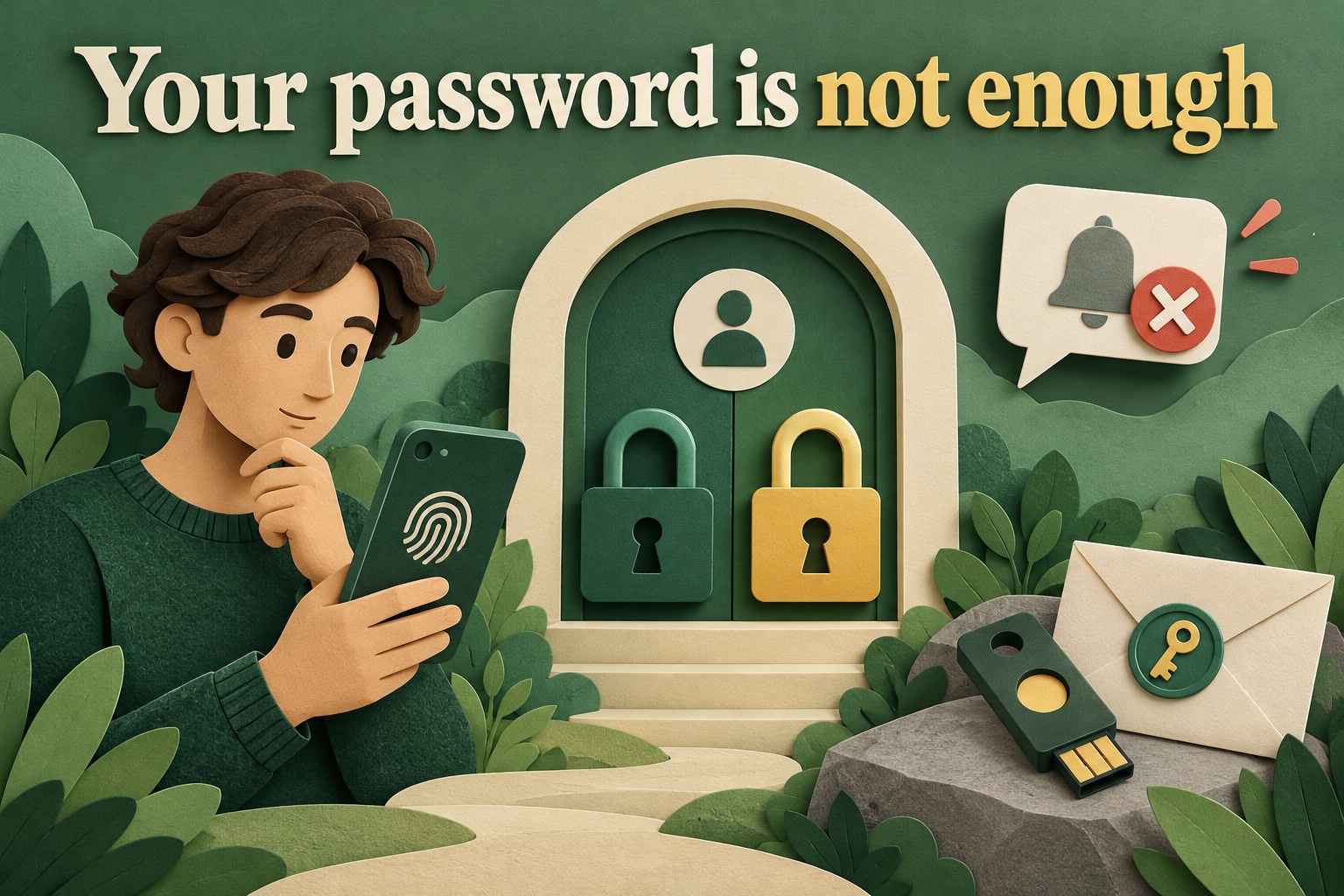
You have chosen a long, unique password. Good. But what if someone still obtains it? An additional sign-in check can stop that password being enough on its own. You still need to understand what you approve.
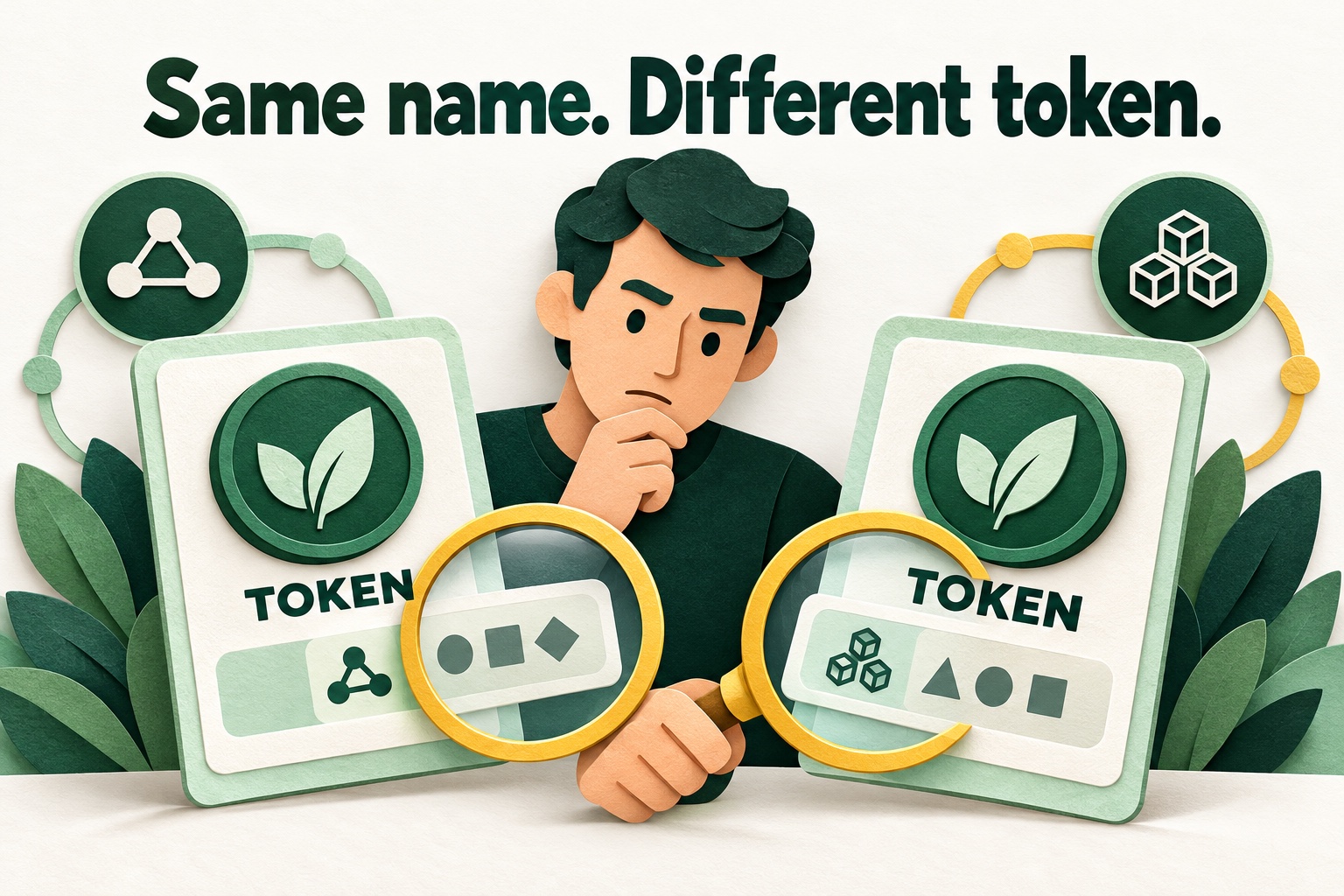
You search for a token and recognise its name, ticker and picture. Ready to continue? Pause for a moment. Those details can be copied. A short identity check helps you avoid using a different token from the one you intended. You do not need to buy anything or connect your wallet to begin checking.
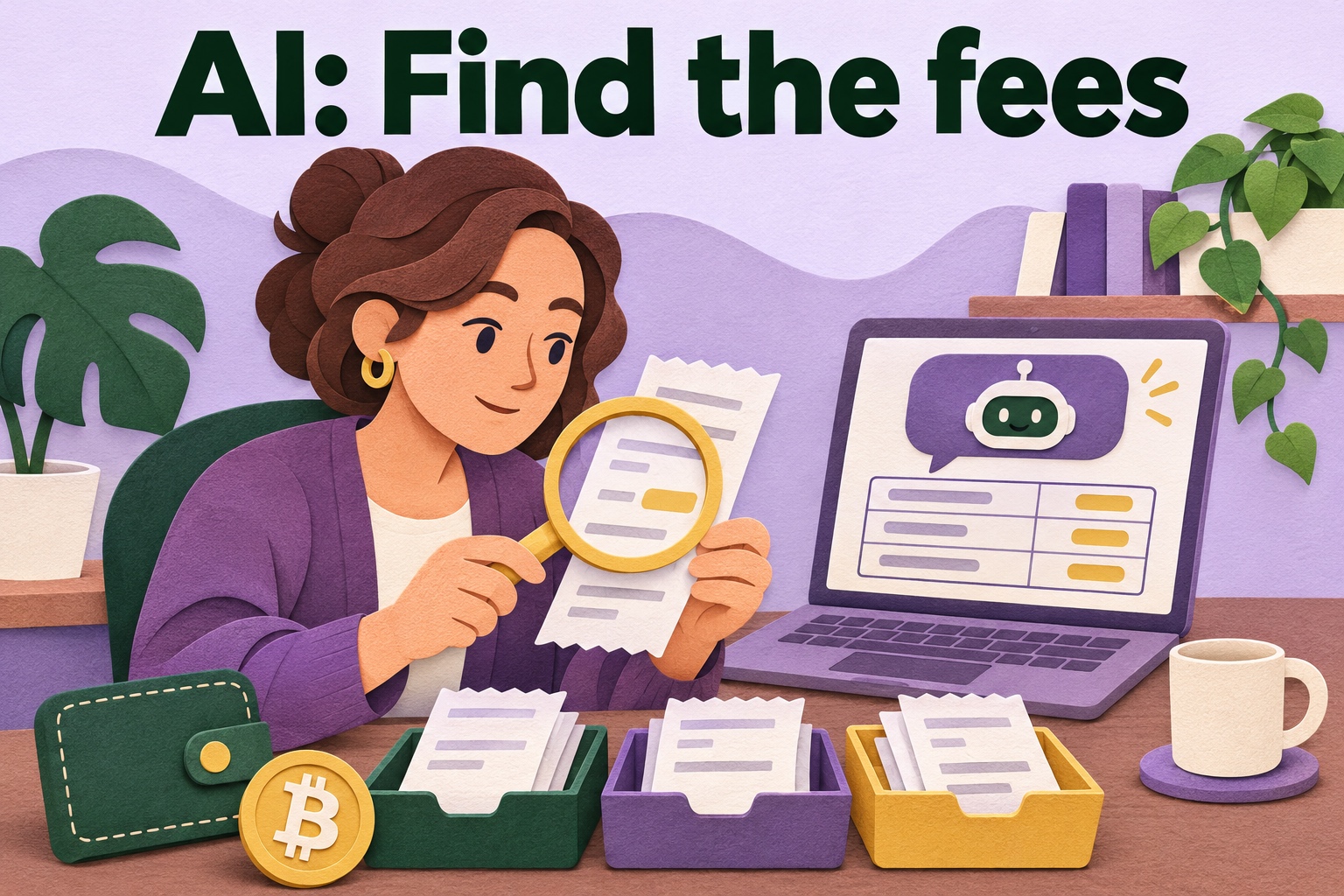
Your balance has fallen. Did you pay fees, move crypto or experience a price change? Those are different things. An AI assistant can help organise a fee overview so you can see small amounts adding up, without giving a chatbot access to your wallet.
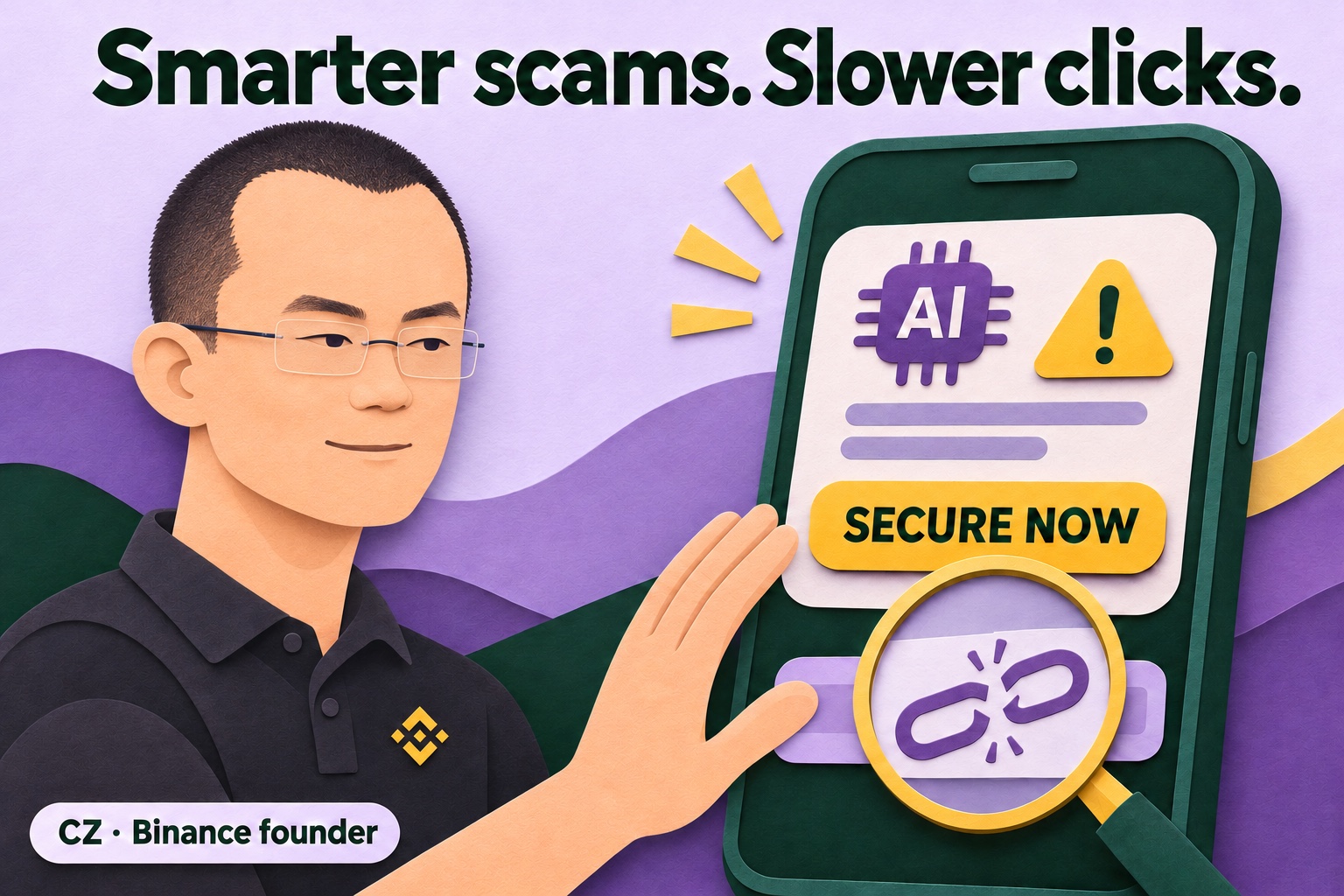
A message arrives: “Suspicious activity. Secure your crypto now.” The logo looks right, the writing is flawless and the button feels reassuring. That is precisely why you might fall for it. Binance founder CZ’s warning about AI and hacks is a useful reason to change one habit: check who is asking you to act before you follow the instruction.
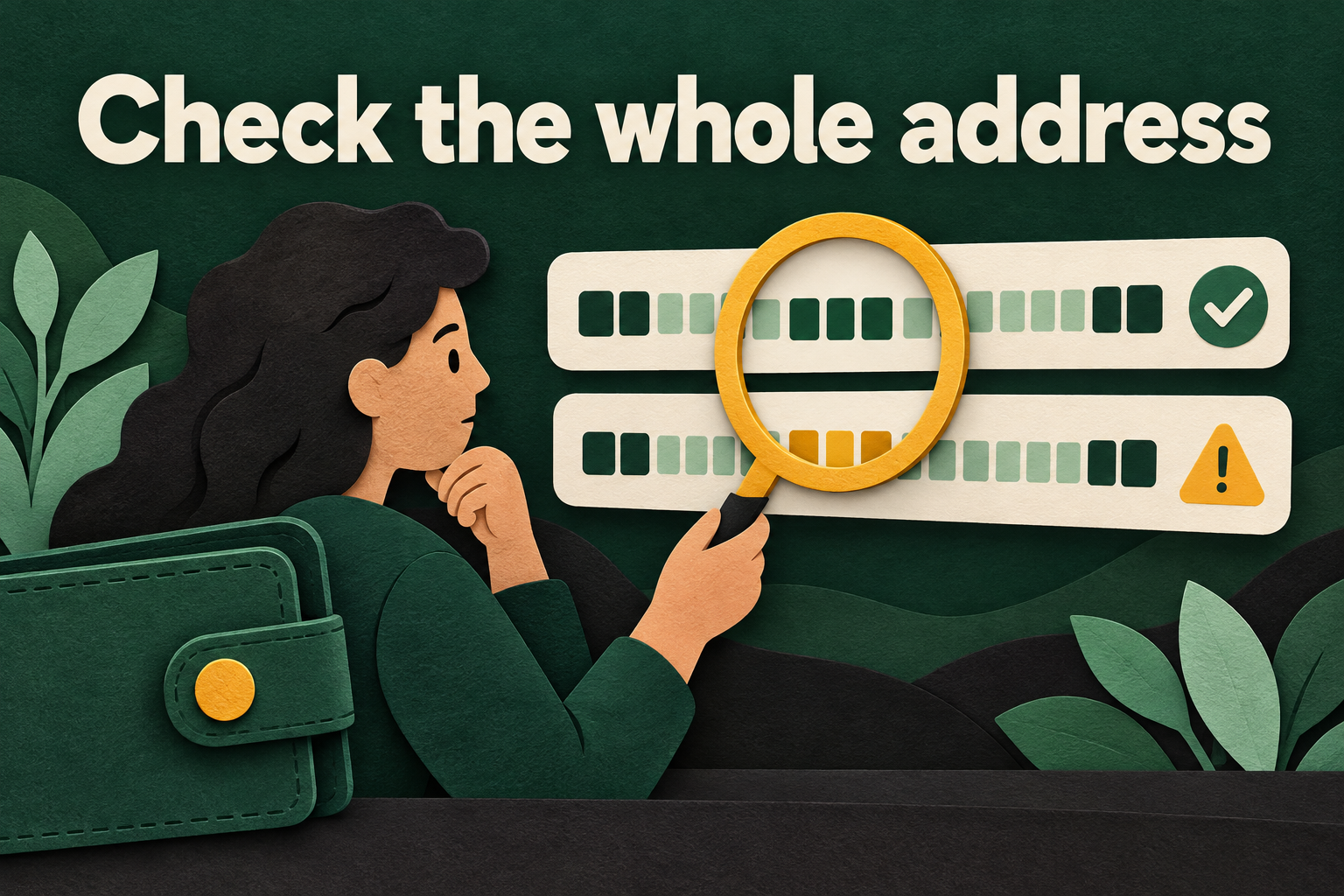
You want to send crypto again and copy an address from your history. The beginning and ending look right. Your money could still go to someone else. Learn why a familiar appearance is not proof, and what to check before every transfer.
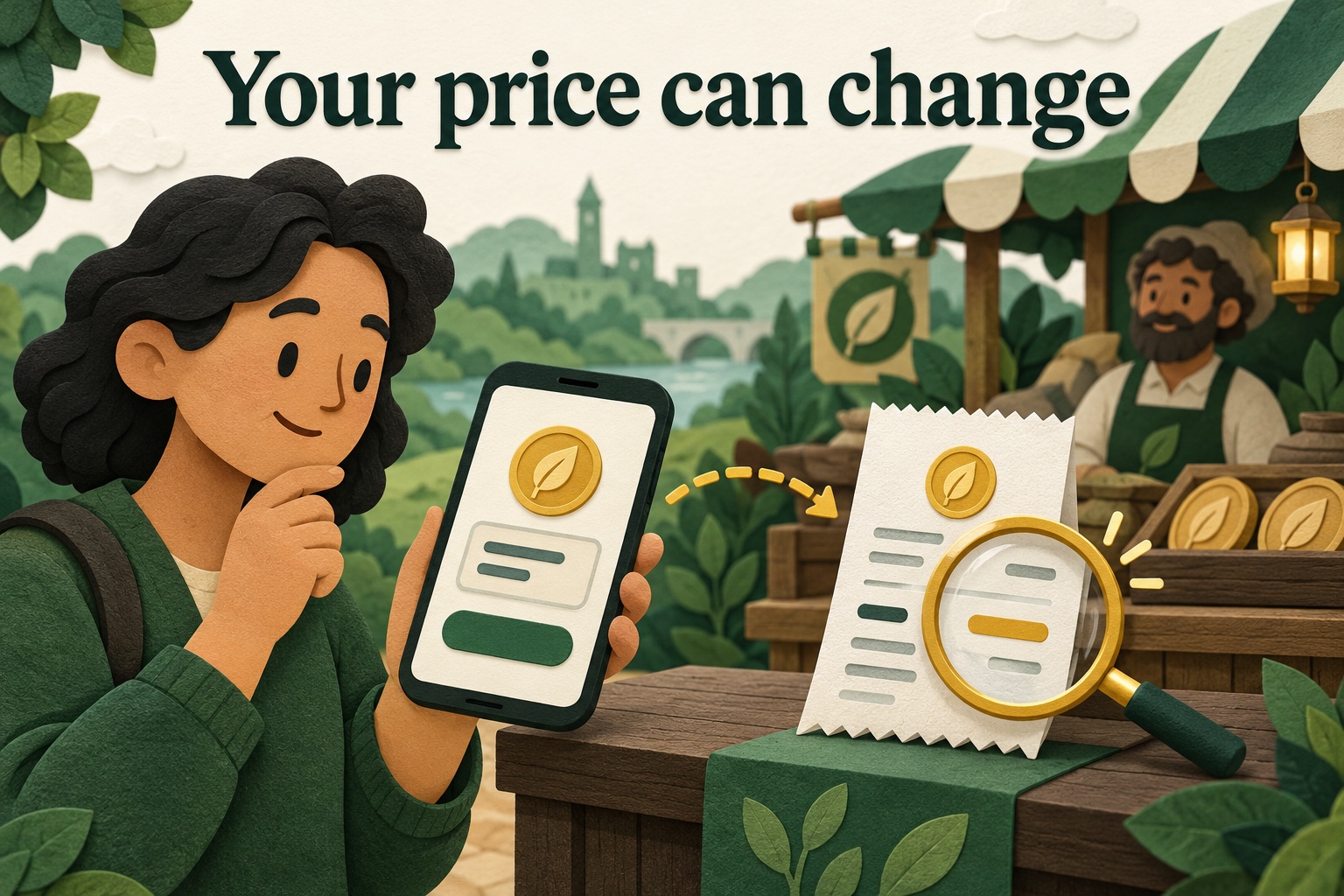
An app displays a price. You press buy, and the result differs from what you expected. That need not be an error: a displayed price, an offer and an executed order are different things. Understand the difference before you confirm.
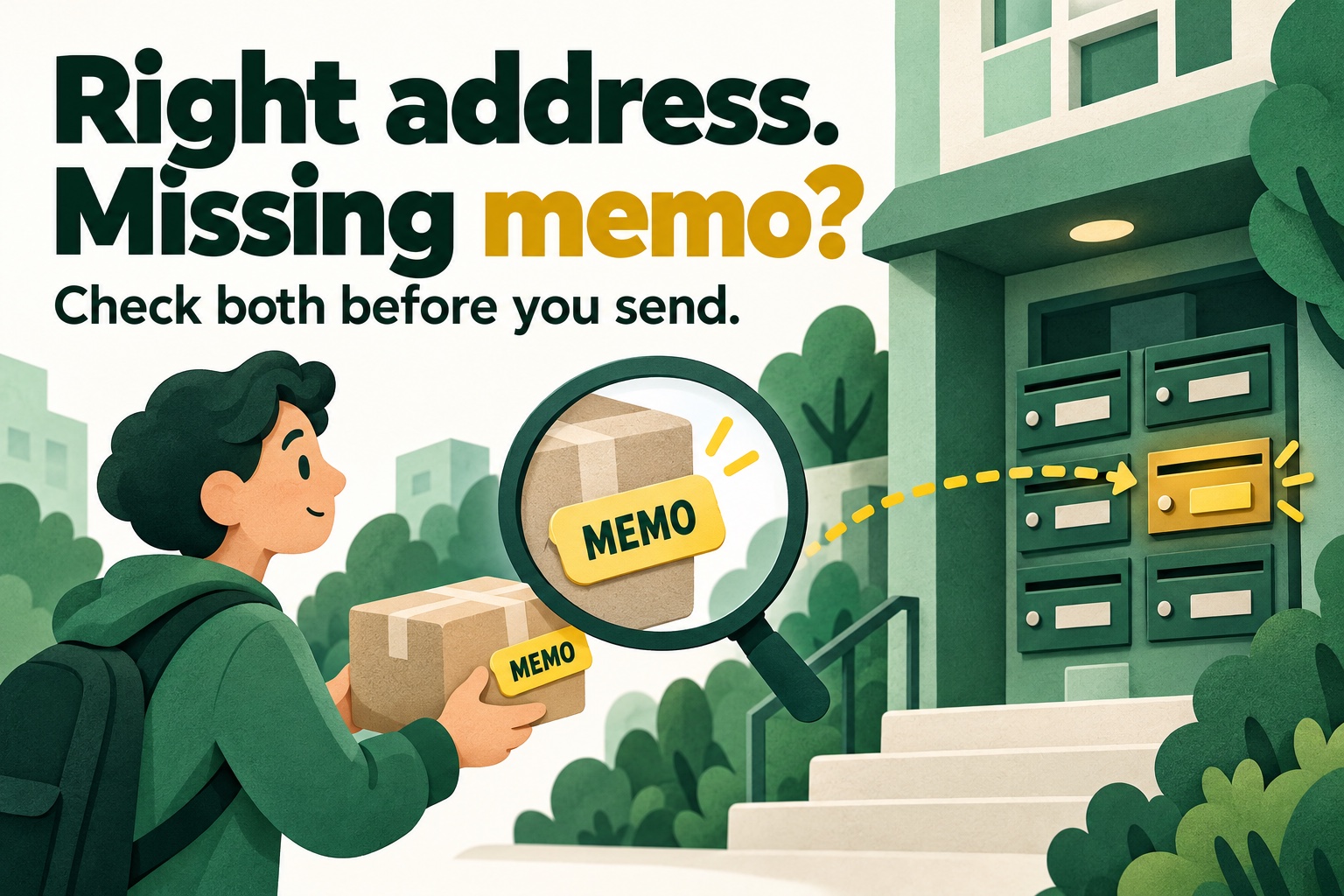
You copy the address carefully and choose the correct network. Ready to send? Sometimes one detail is still missing: a memo or destination tag. That small extra field can determine whether a receiving service knows the deposit belongs to your account.
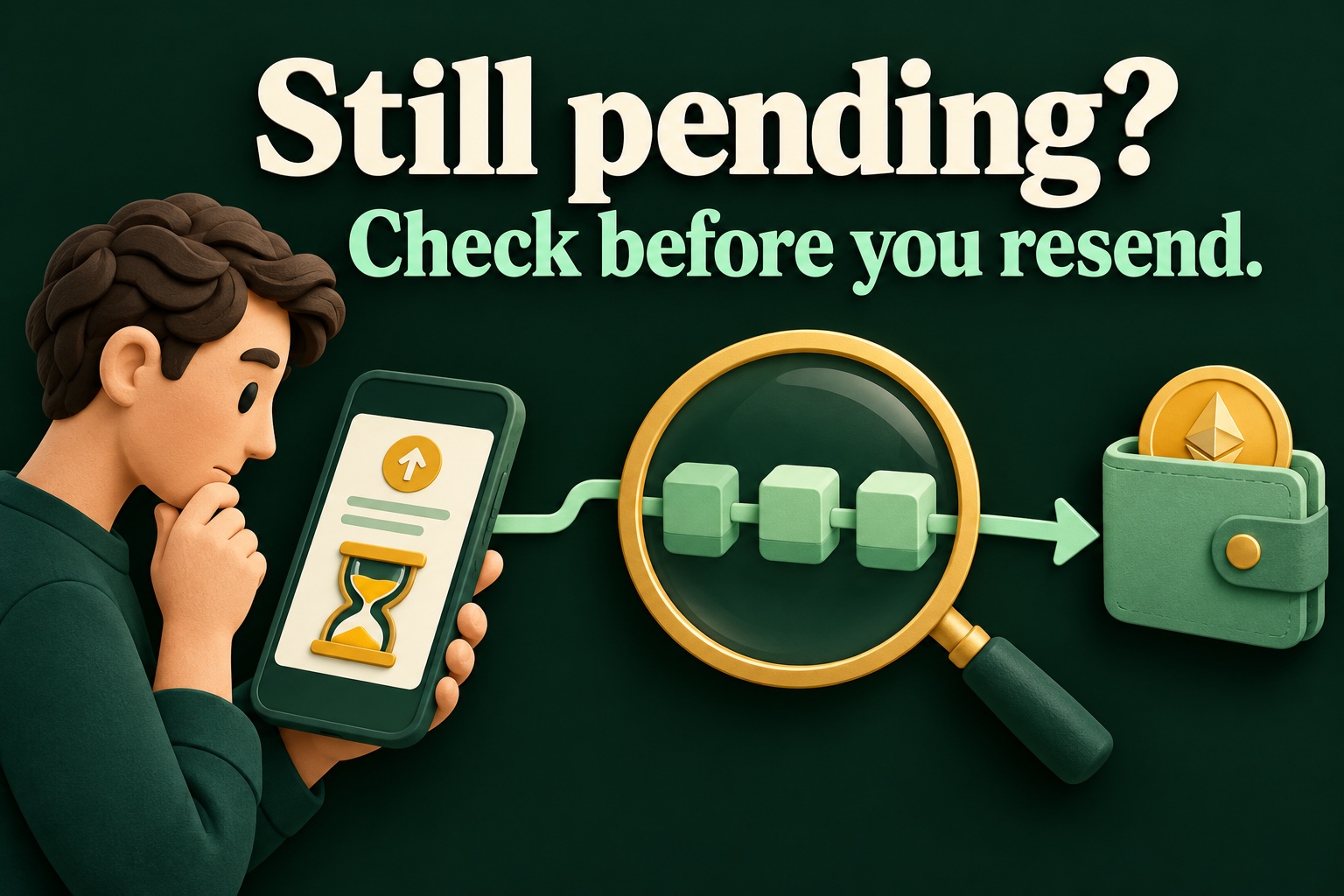
You press send and keep staring at “pending”. Starting again is tempting. But a slow status does not tell you where the wait is happening. A few calm checks can help you avoid making a second payment while the first is still on its way.
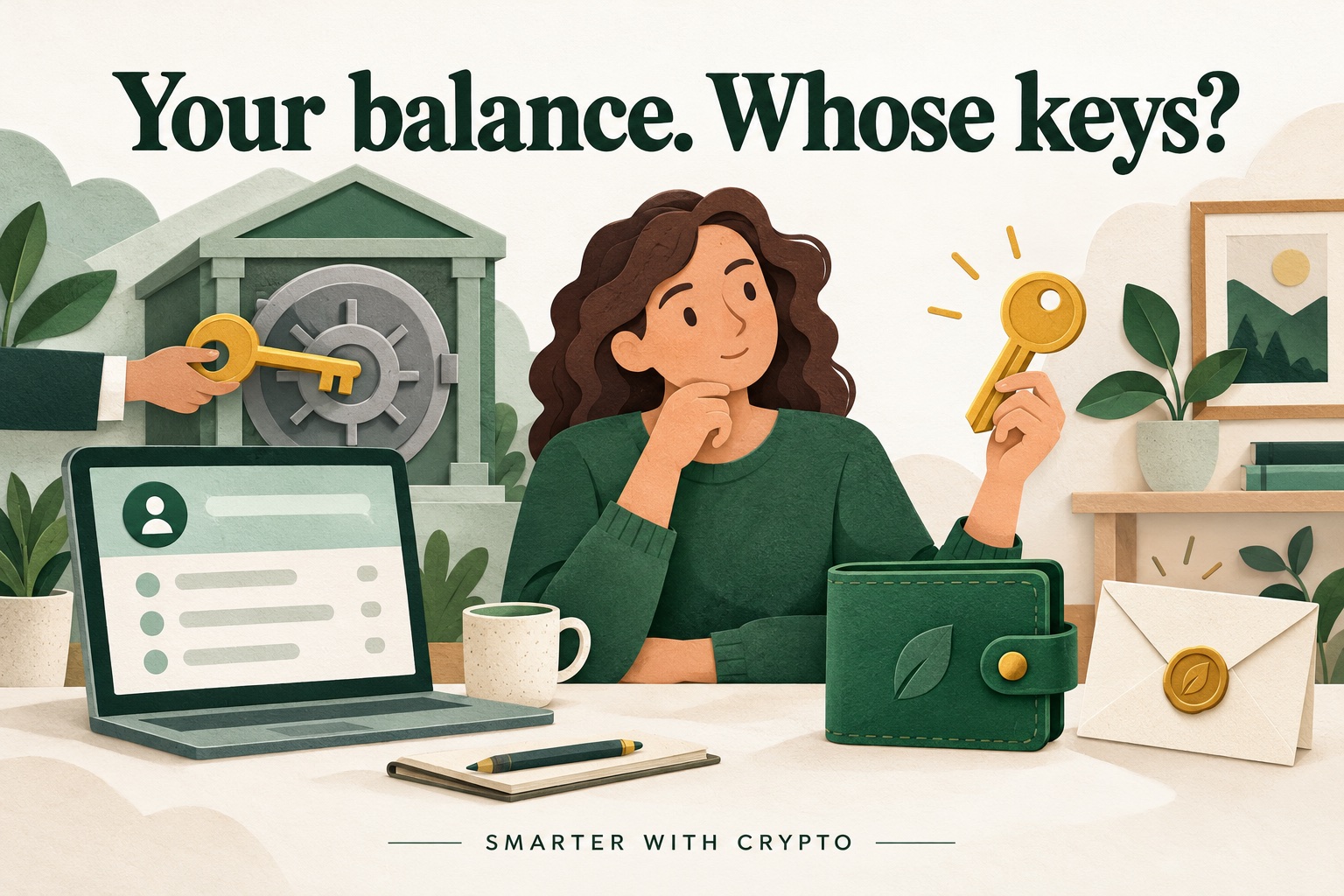
Two apps can display the same balance and work very differently. With one, you ask a company to move your crypto. With the other, you sign yourself. That difference determines who you rely on when you want to send, lose your phone or can no longer get in.
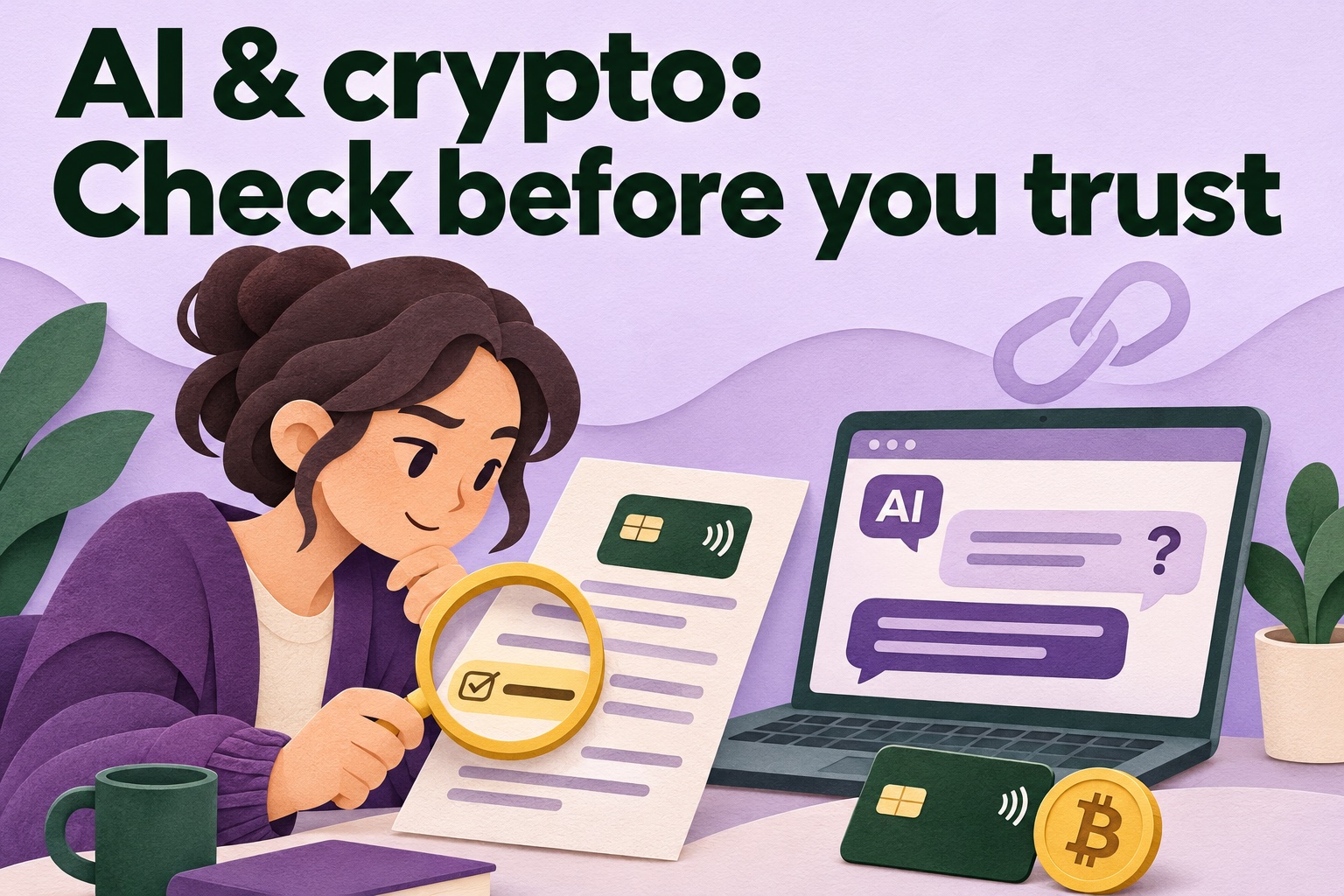
Which crypto card would cost me less? What does that wallet condition mean? An AI assistant can organise complicated information. That can save you time and help you spot costs. But a clear answer can still miss an important condition. Here is how to use AI while staying in control of decisions involving your money.
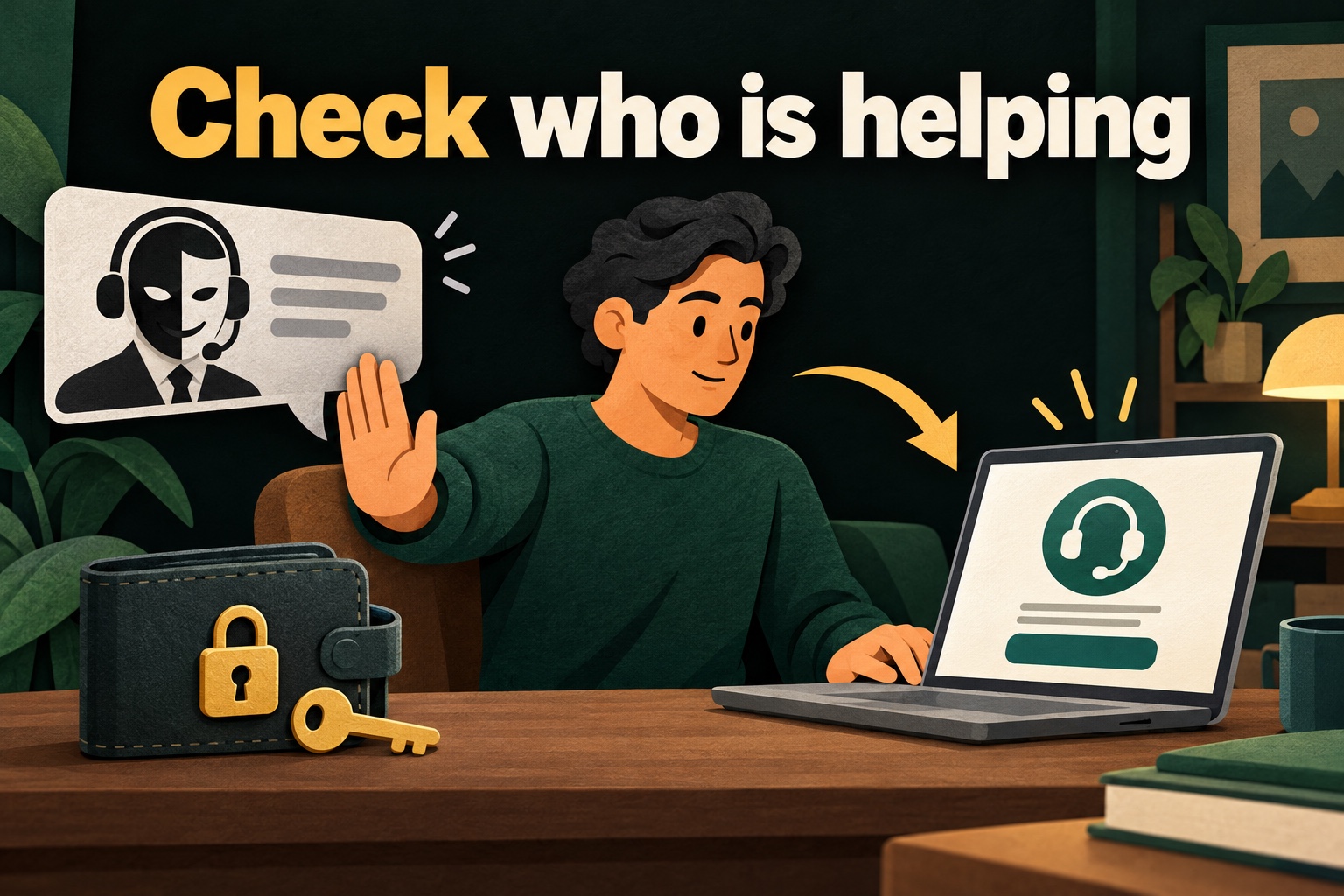
Something seems wrong with your wallet. You ask a question, and someone immediately offers help. That quick answer can feel reassuring. Before following instructions, check who is answering and how you reached them. Good help starts with a route you can verify, while your wallet secrets stay private.
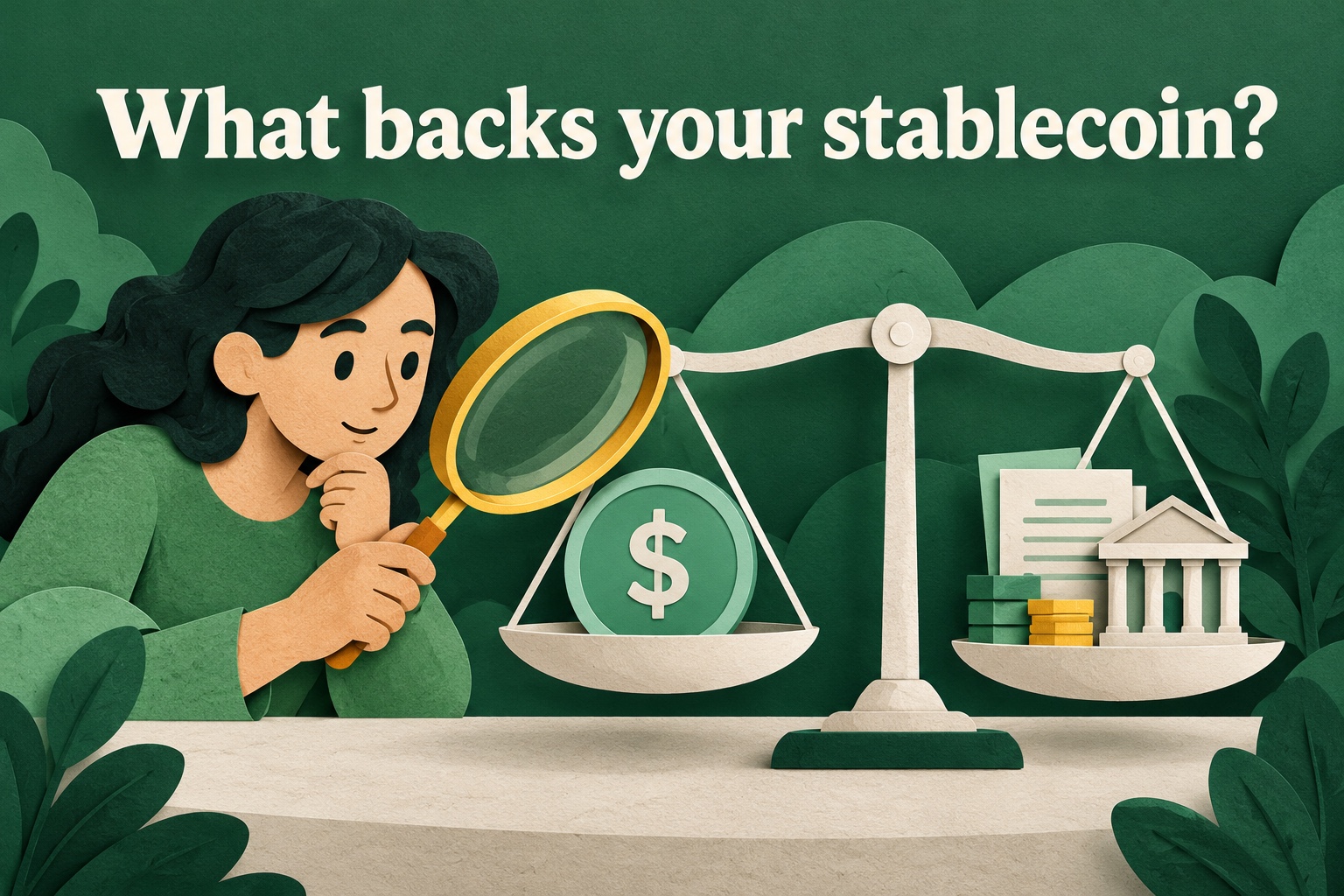
A stablecoin aims to follow a reference value, often one US dollar. That can make amounts easier to understand than a constantly moving crypto price. But the word stable describes a goal. To understand the token, look at its backing, the route back to money and the currency you actually spend.
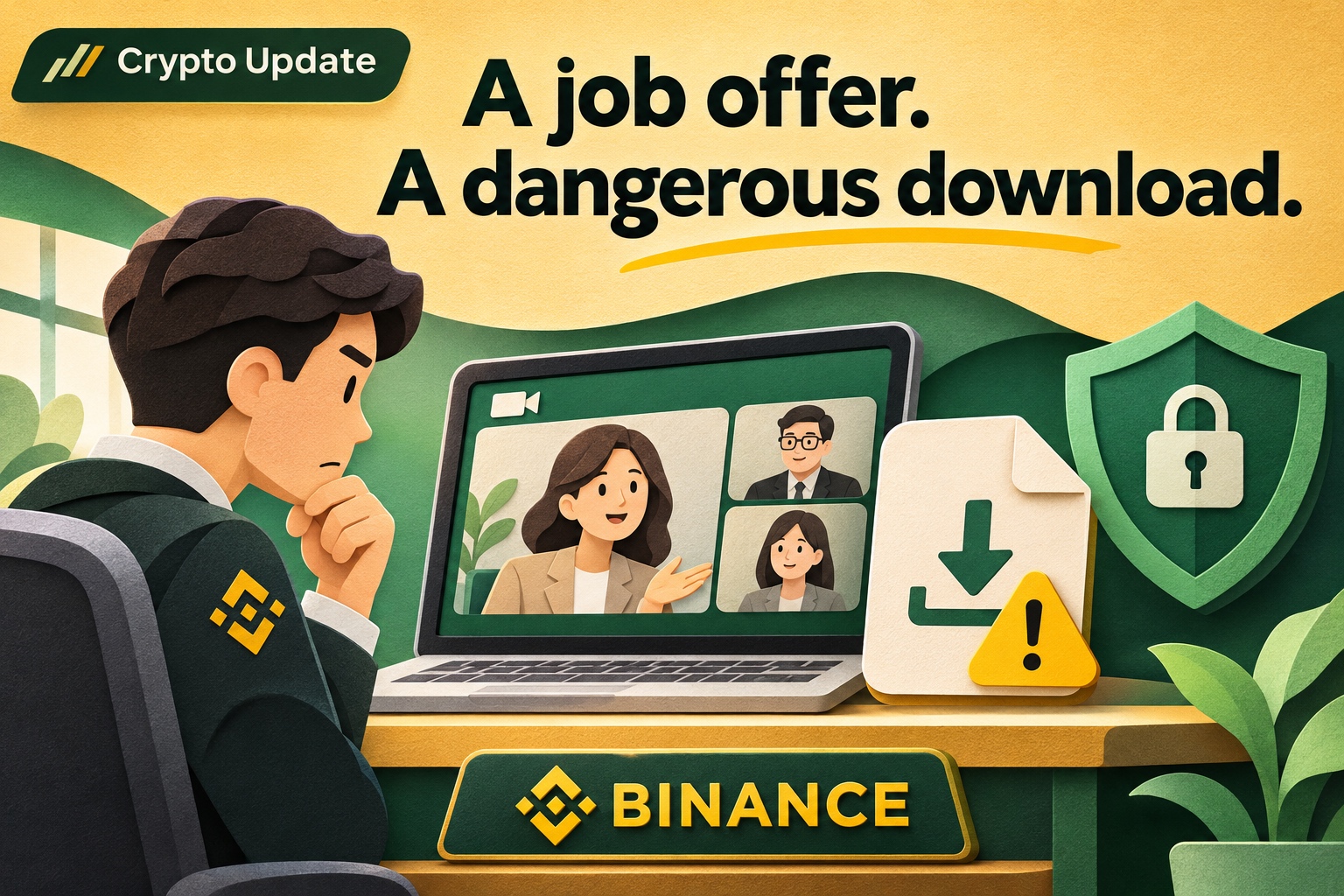
A professional profile. A friendly conversation. An attractive opportunity. Everything may feel convincing. Yet the key question remains: what exactly is this person asking me to do? Three simple checks can help you recognise a dangerous request sooner.
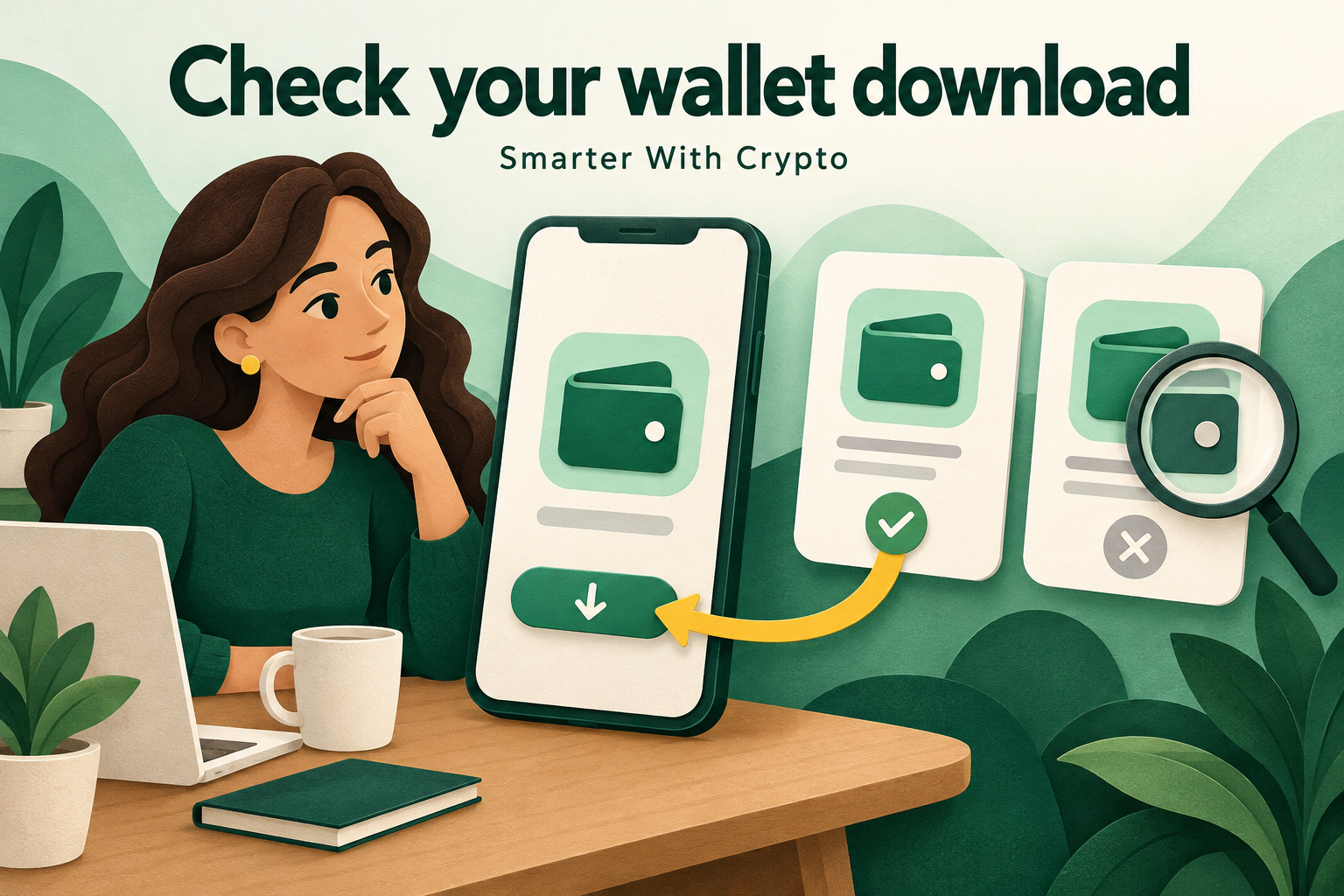
A familiar wallet logo is easy to copy. Before choosing how to use a wallet safely, check where the app or browser extension comes from. The route to the download matters just as much as the name shown beside its icon.
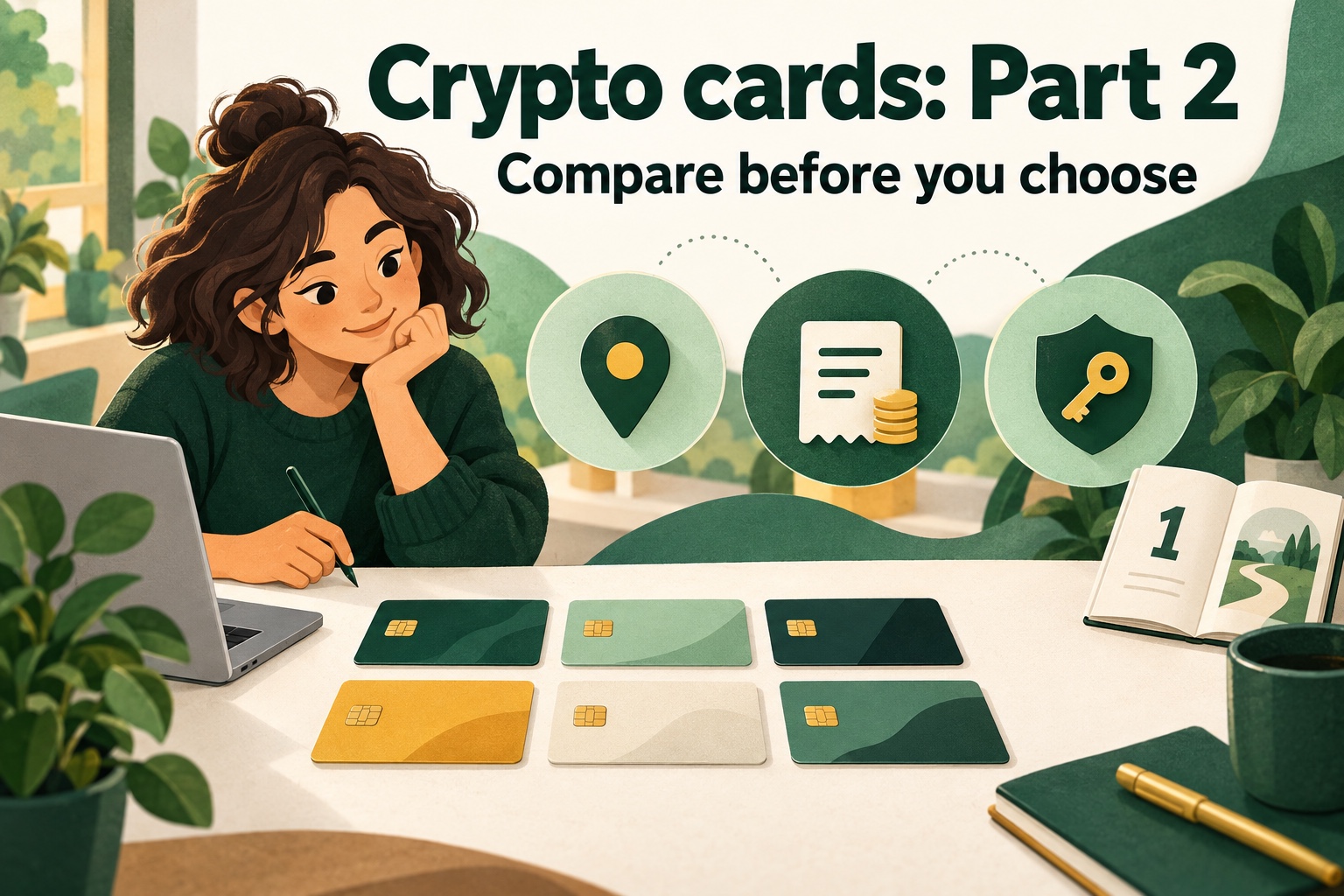
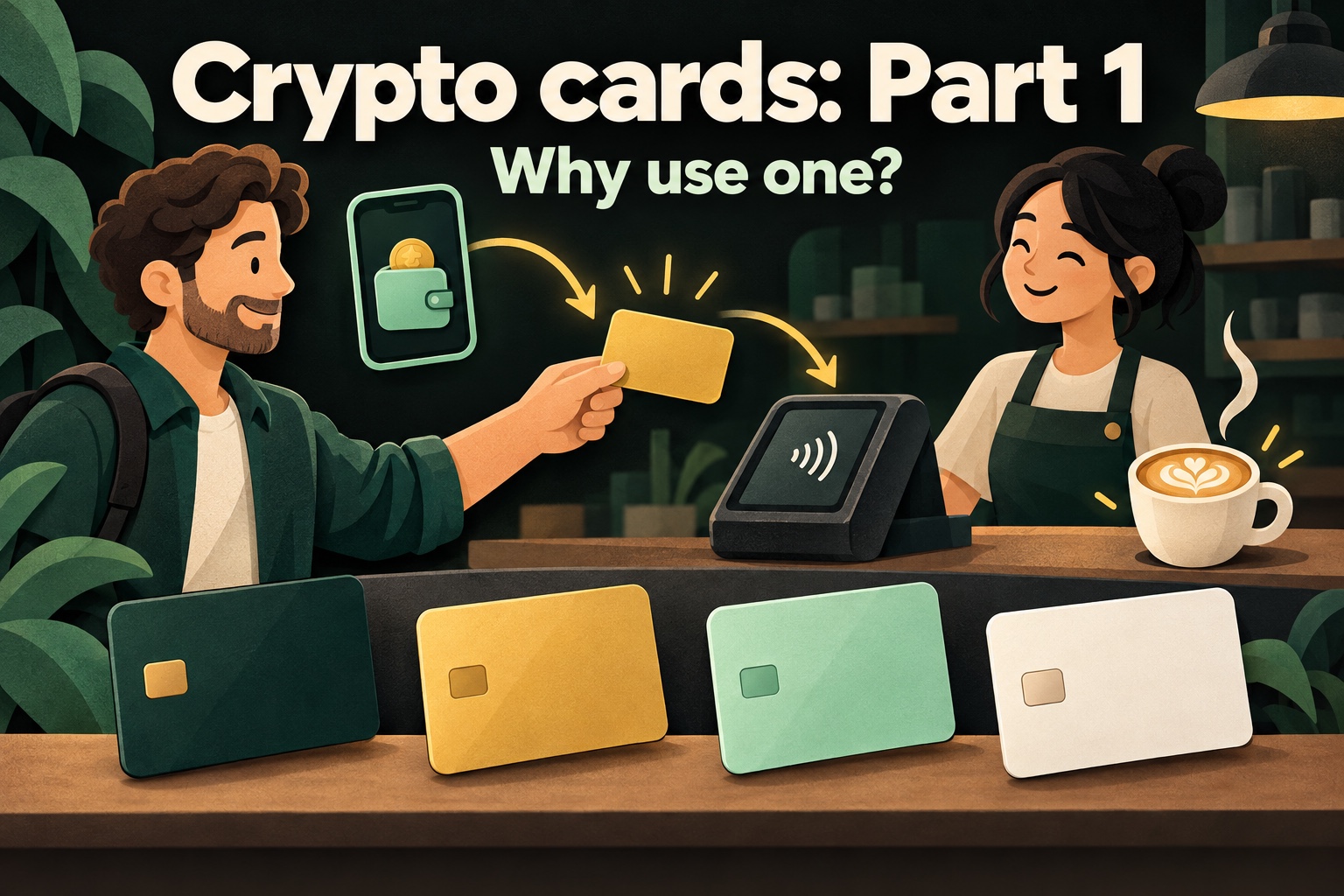
In part 1 we explained why a crypto card can be useful and introduced four options. Here are the remaining six from the same CoinGecko list, in the same order. Read part 1 through the link below if spending, loading a balance and borrowing still feel like the same thing.
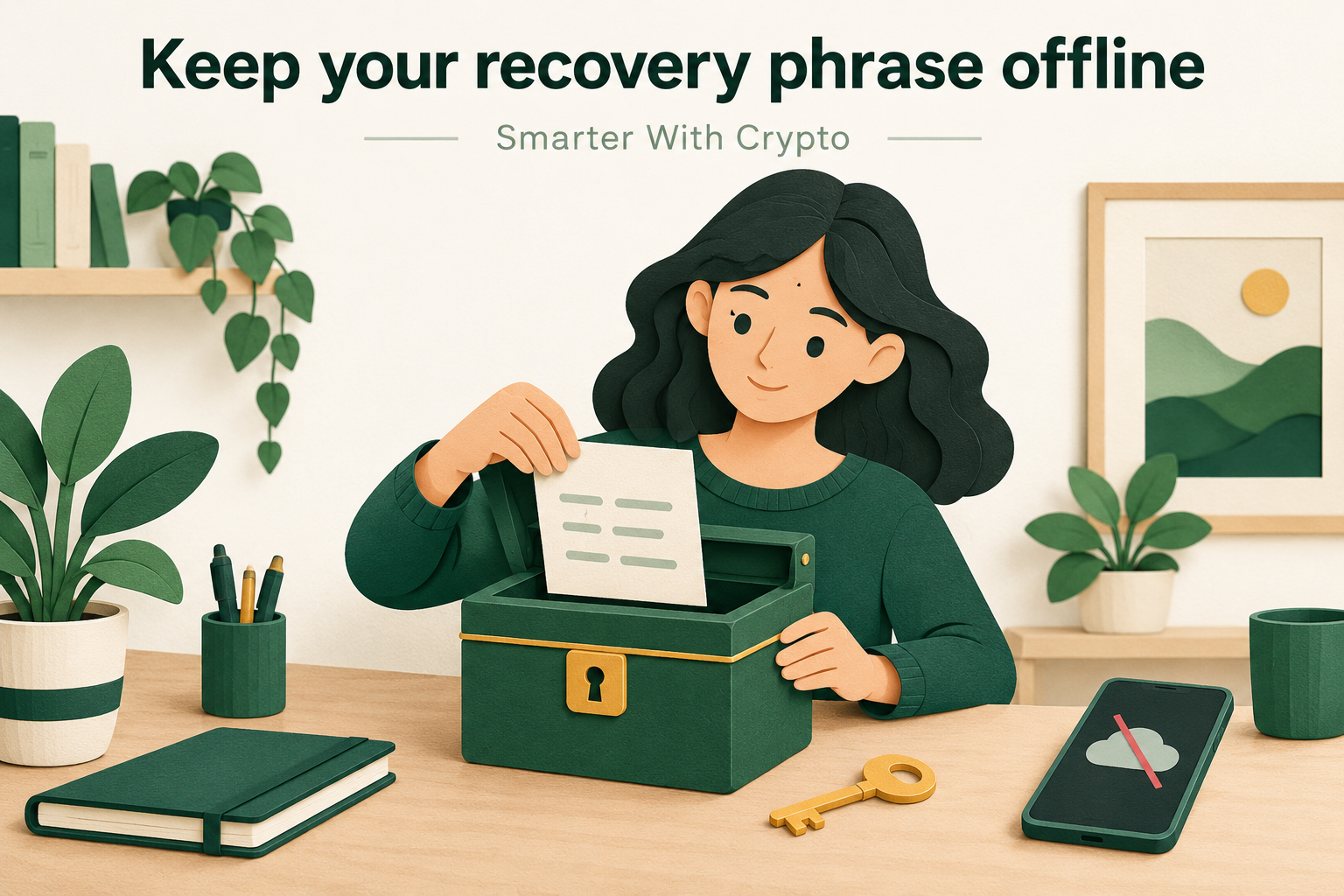
A wallet password can feel like the main secret. For a wallet you recover with a phrase, those backup words deserve special care. Understand what they control before deciding where to keep them.
People often ask which crypto wallet is the best. My answer starts with you: the one you learn to use safely. That means a trustworthy tool suited to your needs, and habits you understand well enough to repeat without rushing. A popular name alone cannot do that work for you.
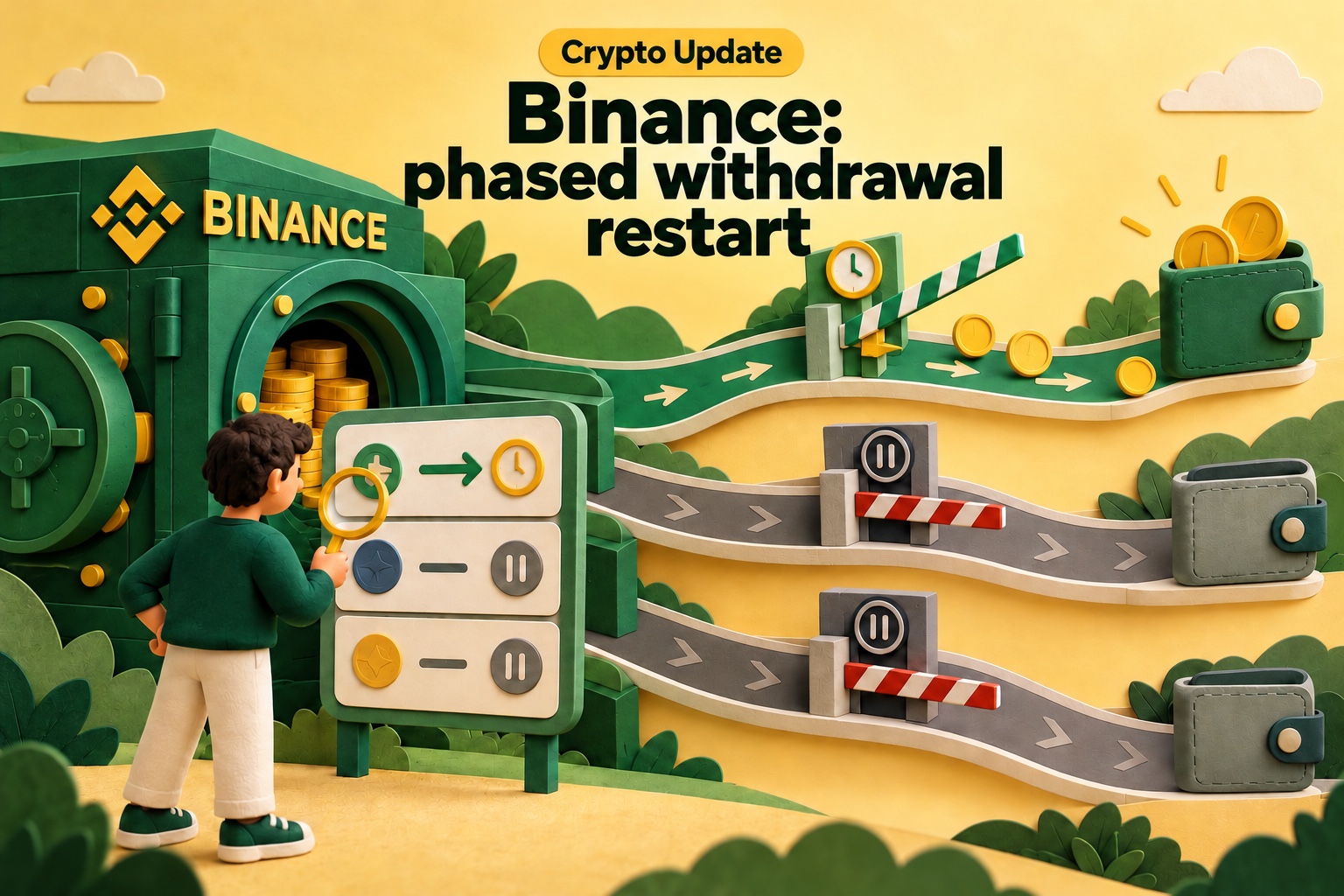
Withdrawals now have a specific proposed restart window. But a phased reopening is not a green button for everyone. Your asset and chosen network need to work together.
The FBI attributes the Binance attack to North Korea. That matters for the investigation, but a different question matters to you: what does it mean for your money and access to it?
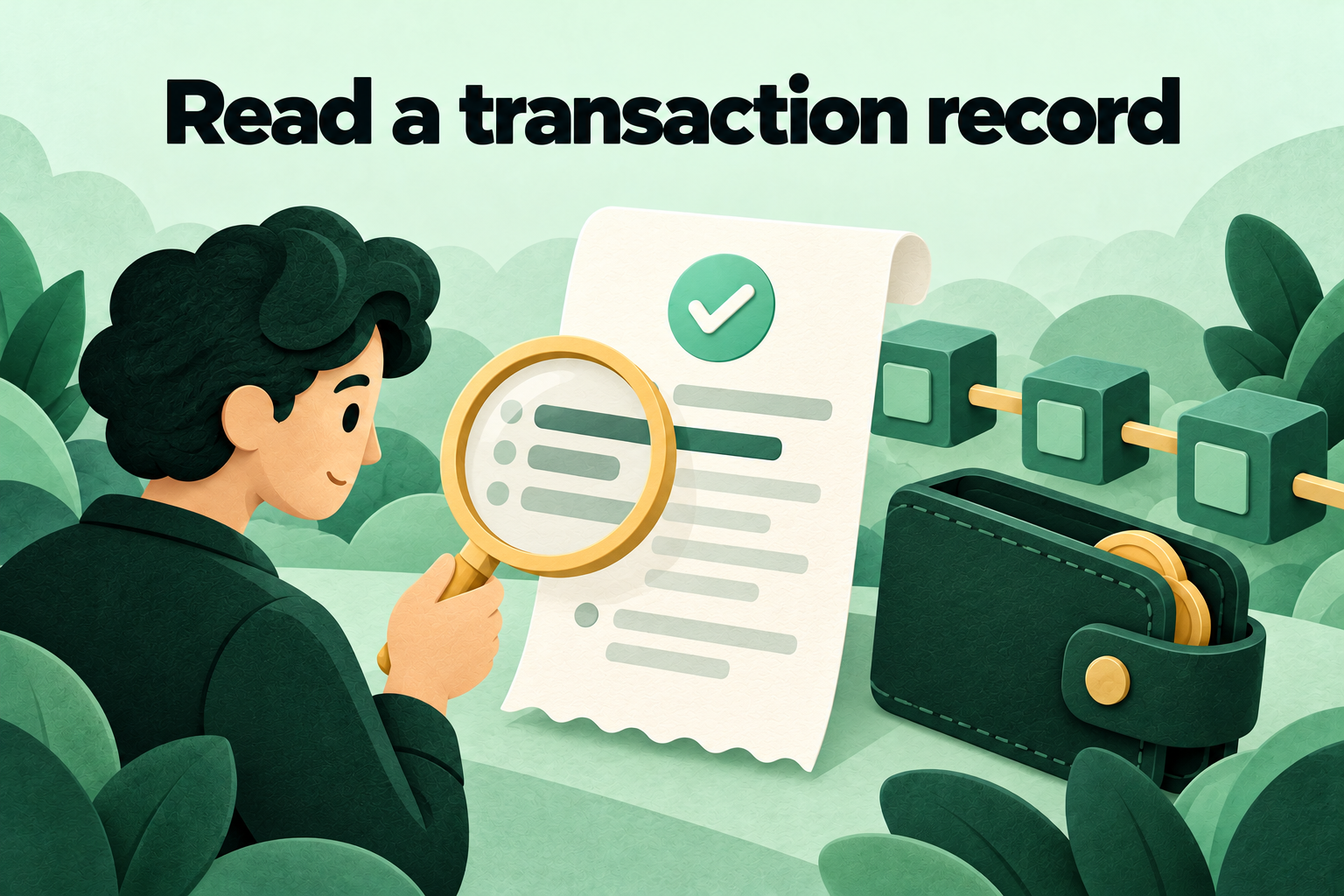
A green check beside a crypto transaction can feel reassuring. Before drawing a conclusion, ask what the record is checking. A blockchain explorer helps you inspect an action on a network. It does not judge every promise made around that action.
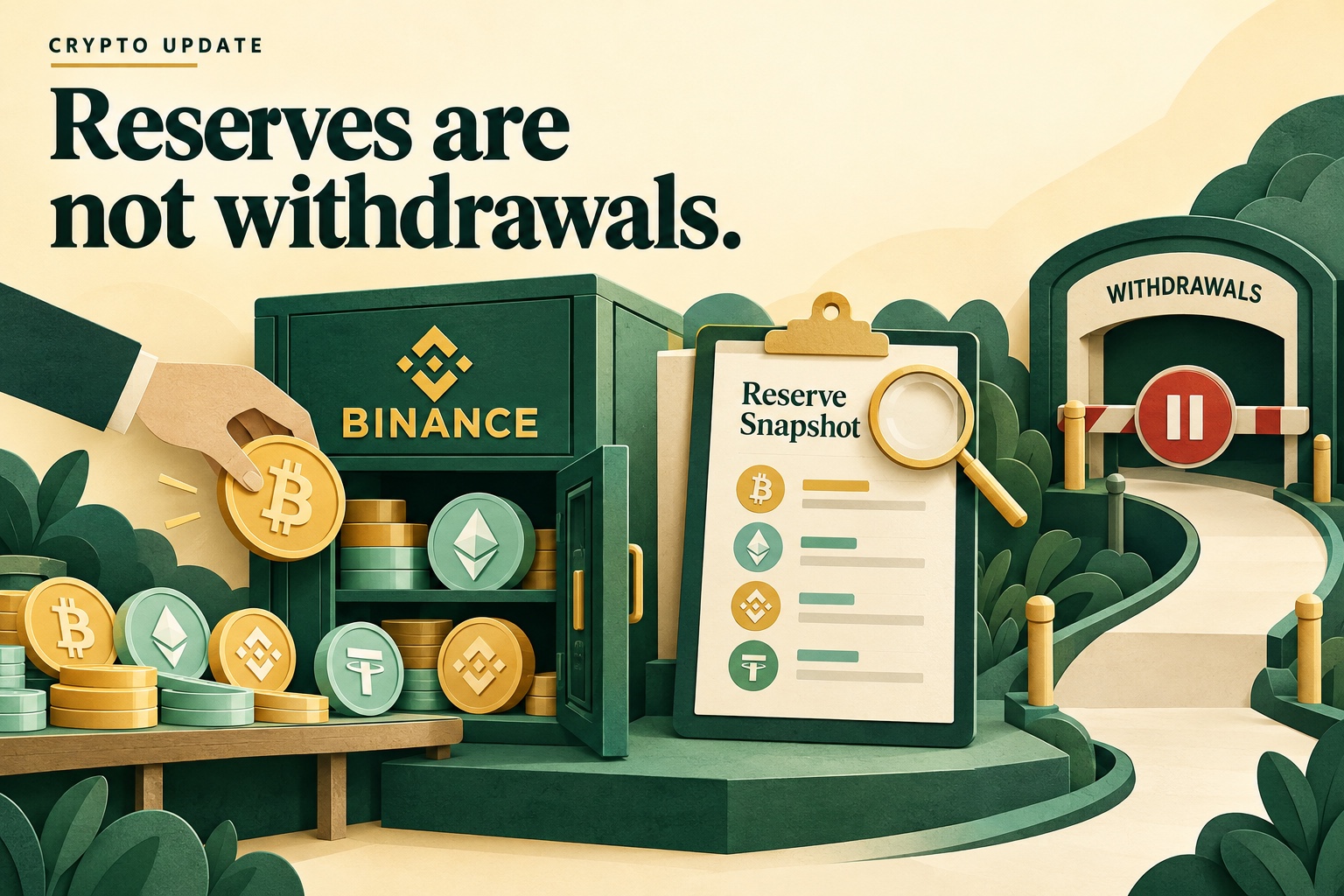
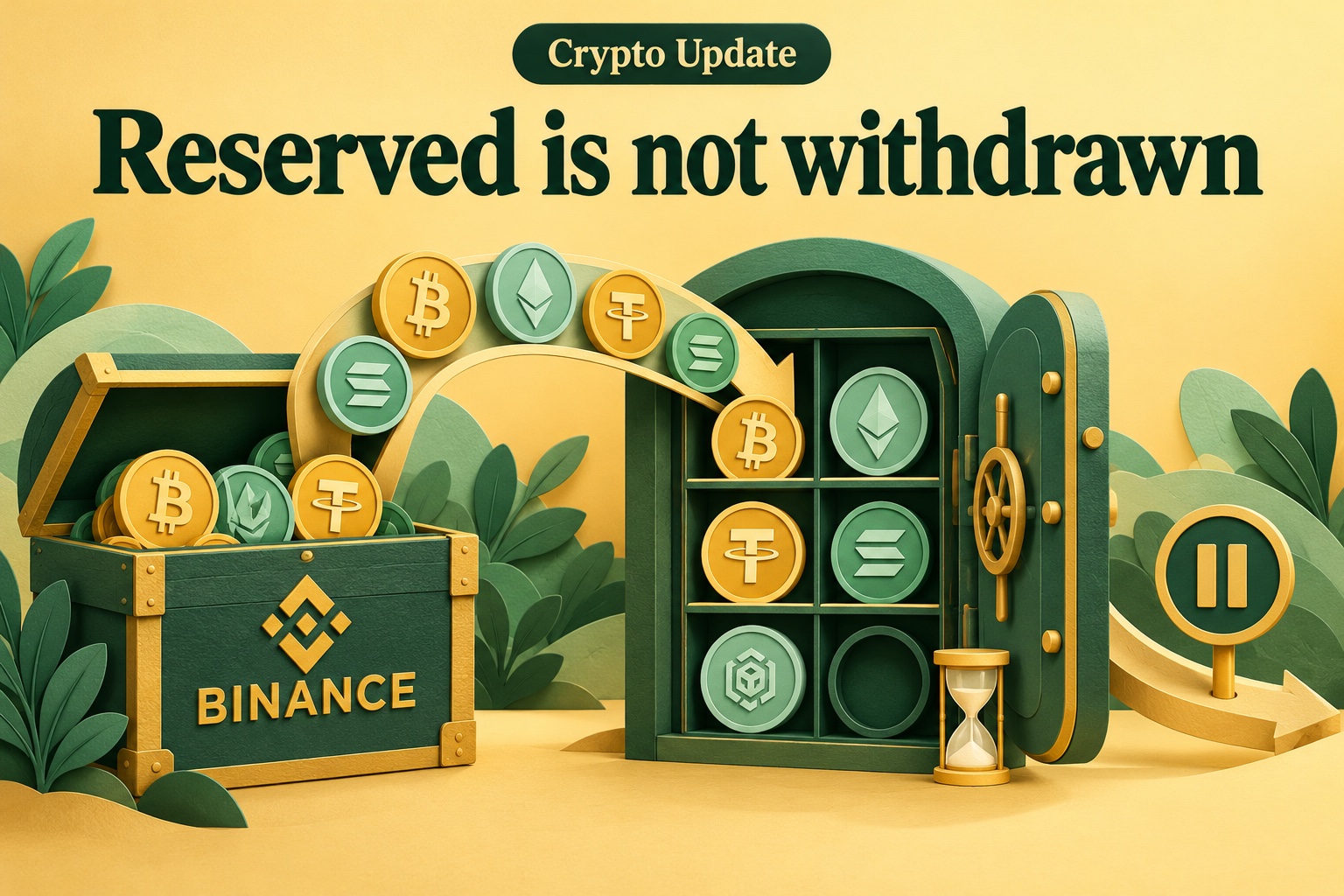
A reserve report can show progress. It does not automatically reopen the exit for your crypto. The latest announcements show why those two things need separate checks.
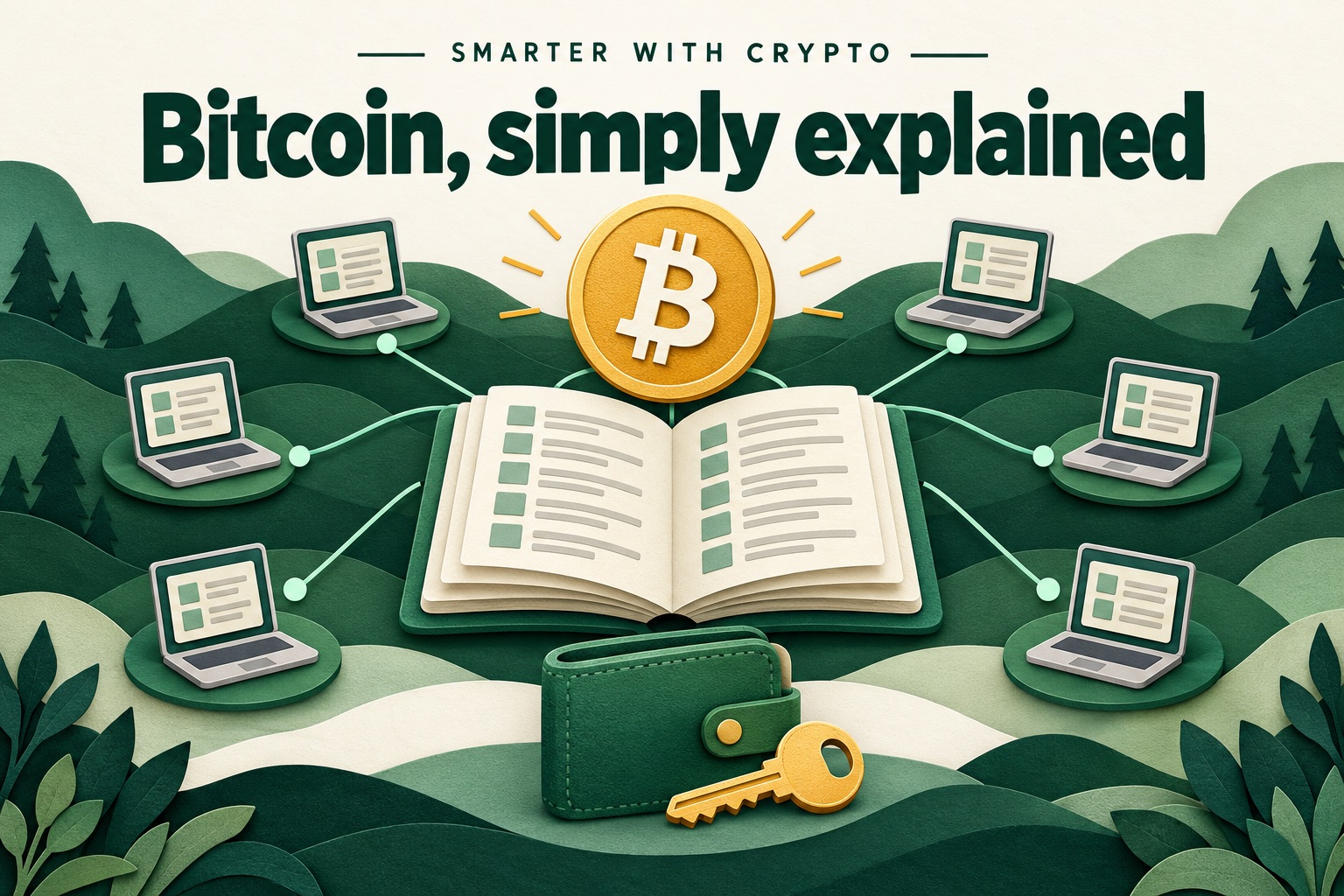
You have undoubtedly heard about it. On television, in the newspaper, through friends or on social media. Perhaps you have even bought Bitcoin yourself. But do you actually know what Bitcoin is, why it was invented and what it could mean for you?
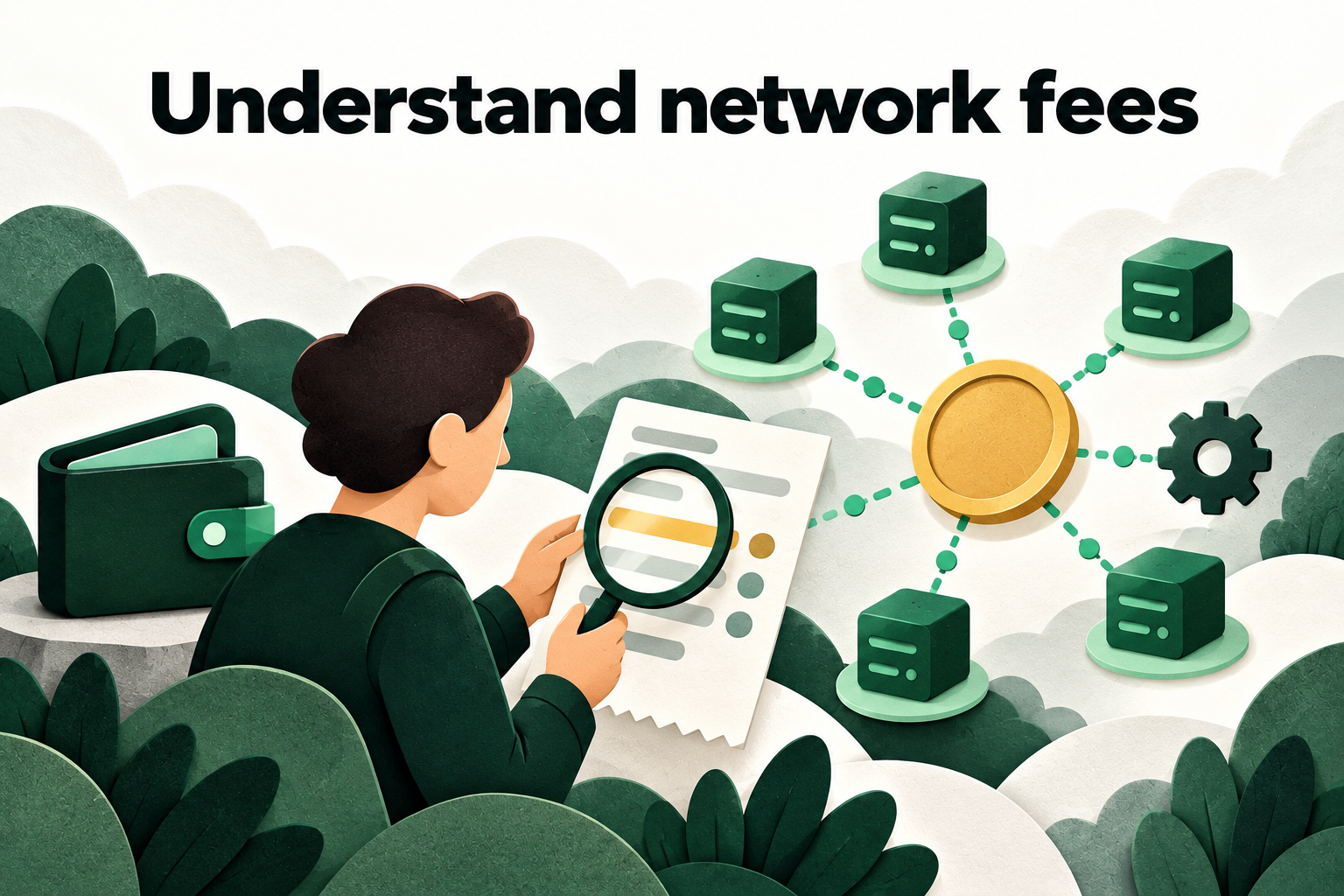
You are about to send a token and your wallet shows another amount: the network fee. It can be small, surprisingly large or different from the estimate you saw earlier. Before comparing prices, separate what you are sending from the cost of processing the action.
A large amount sounds reassuring. Yet reserving money, holding the right cryptocurrencies and letting customers withdraw are three different steps. Binance’s new statement makes that distinction worth understanding.
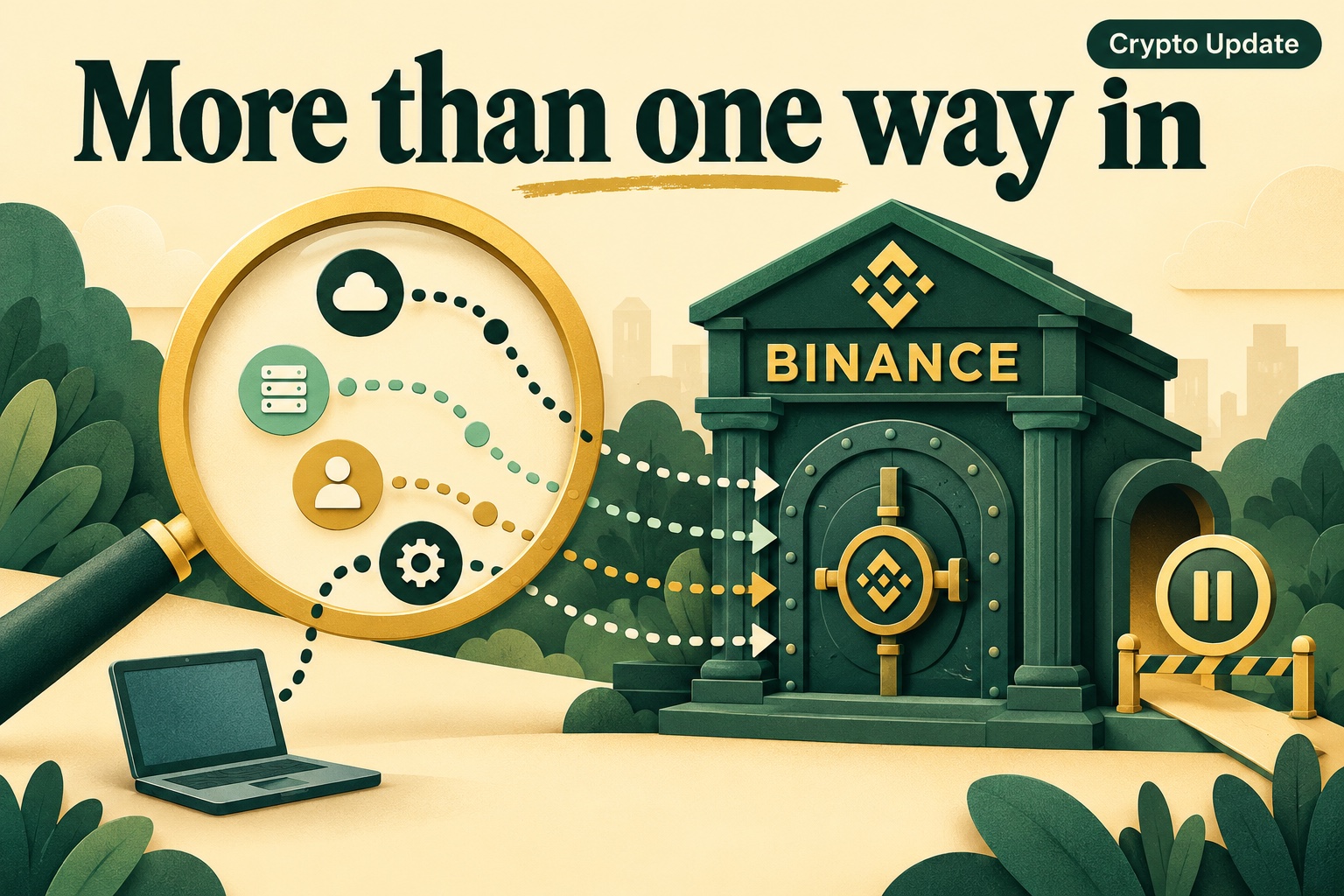
An initial explanation is not the complete answer. Binance now says it has found additional breach points beyond the previously mentioned laptop. What does that new information mean if you want to use your crypto?
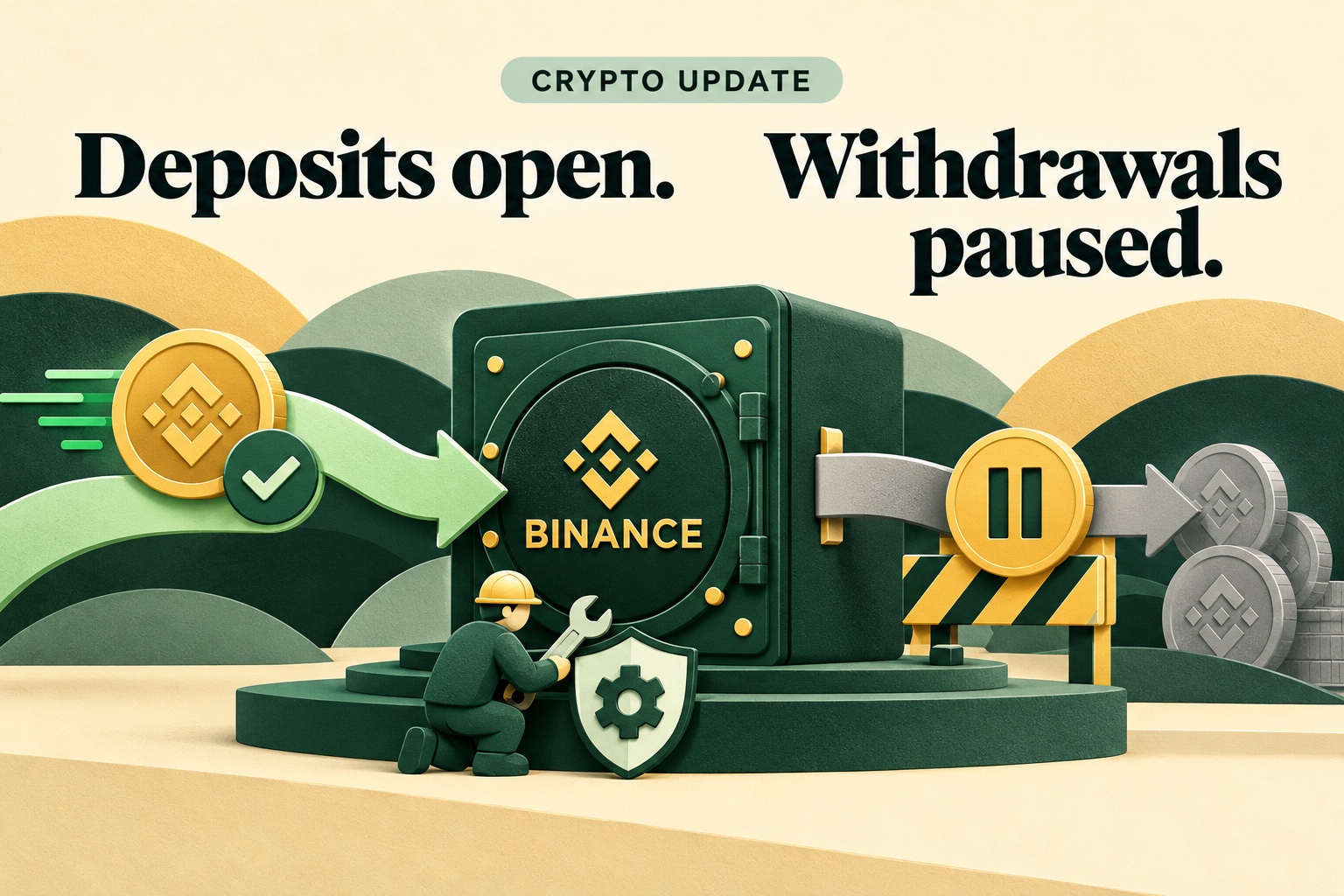
Sending money to a platform and taking it back out are different things. Binance now clarifies that deposits operate normally while withdrawals remain paused. That distinction matters when you want access to your crypto.
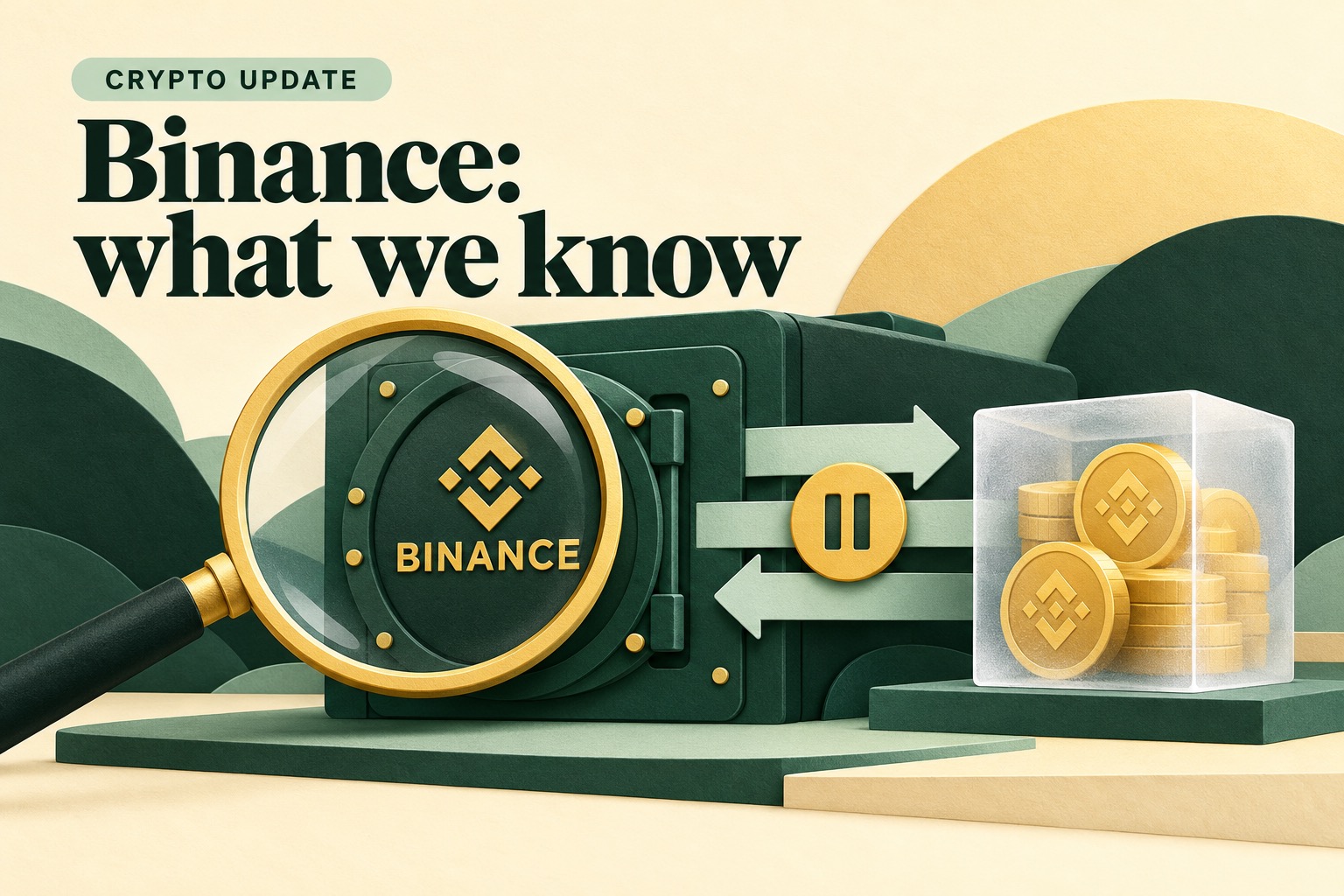
Binance is investigating a security incident and promises to cover losses. Withdrawals remain paused; the newer service update says deposits work normally. Here is what the initial reports mean and what remains uncertain.
A digital token can refer to a bond, a commodity or a building. But a picture in an app does not tell you what you own. With tokenisation, the terms behind the digital record matter as much as the technology.
A crypto card can connect money you already hold in crypto to an ordinary purchase. But what problem does it solve, and how do the cards differ? We start with the first four names in CoinGecko’s overview: Nexo, COCA, Bitget Wallet Card and Brighty.
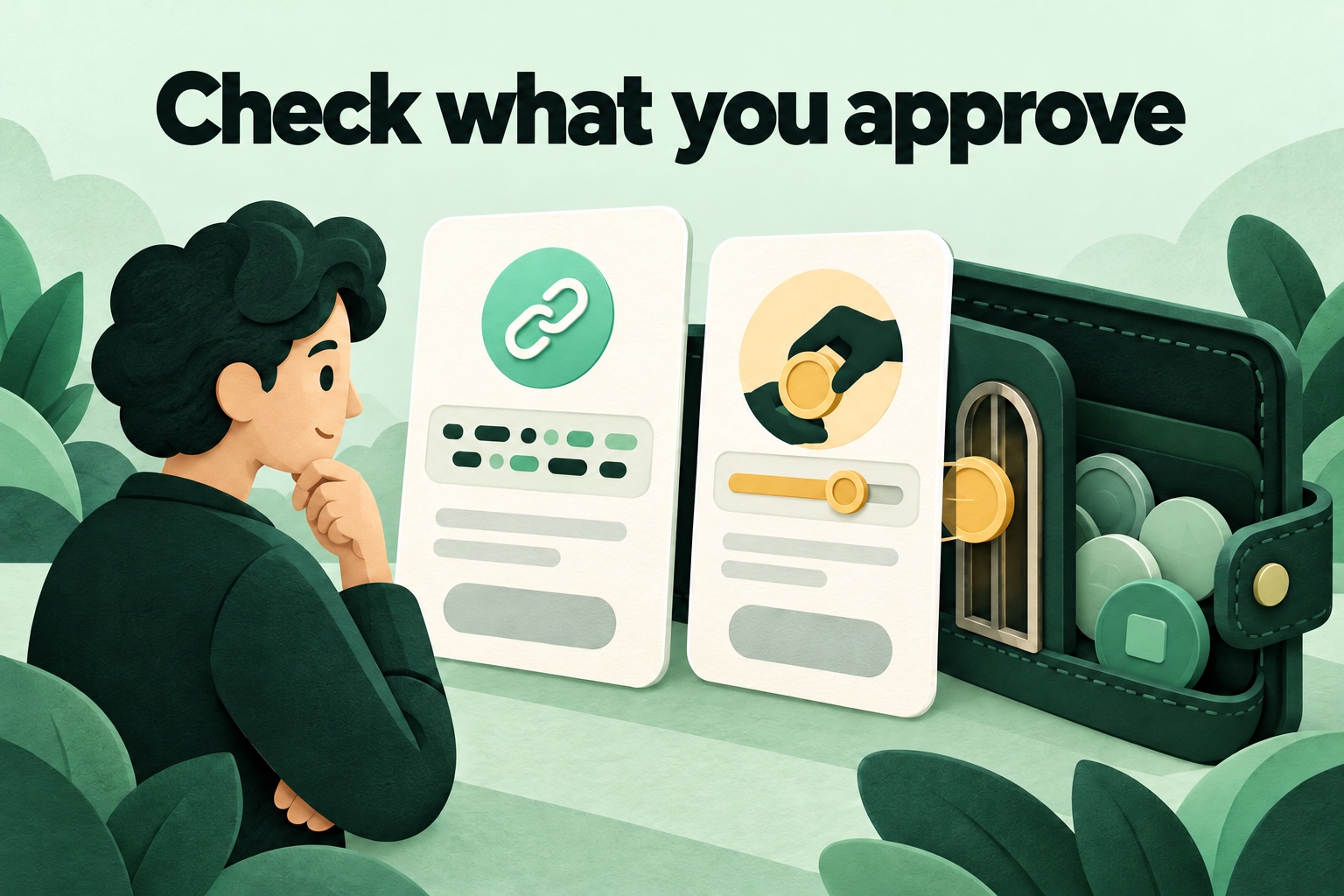
A website asks to connect your wallet. Another request follows: approve, sign or choose a spending limit. Those are different actions. Understanding the permission matters more than quickly reaching the next screen.
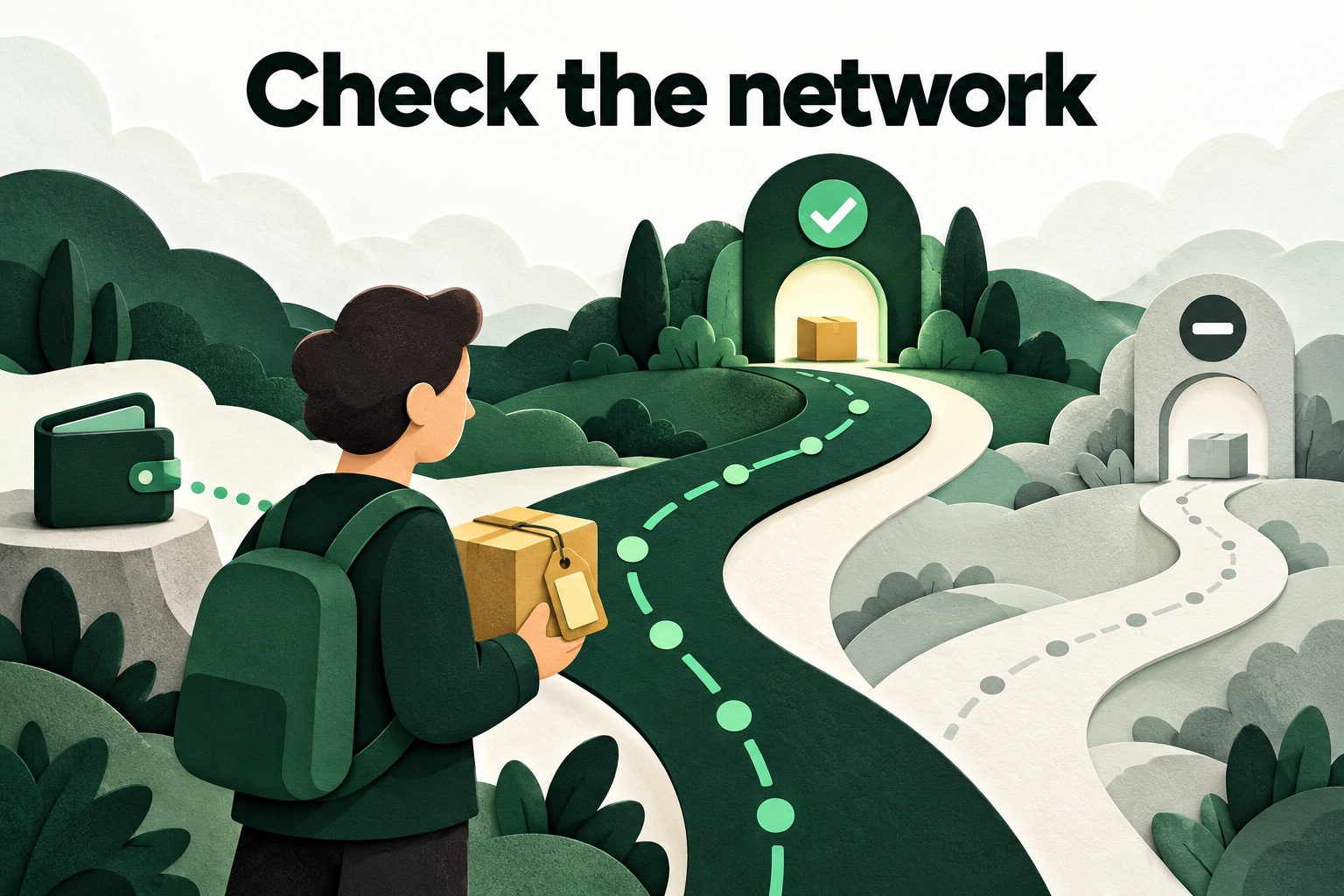
Copying a wallet address can feel like copying a bank account number. With crypto, there is another important choice: the network used for the transfer. The address and the route both need to work for the receiving side.
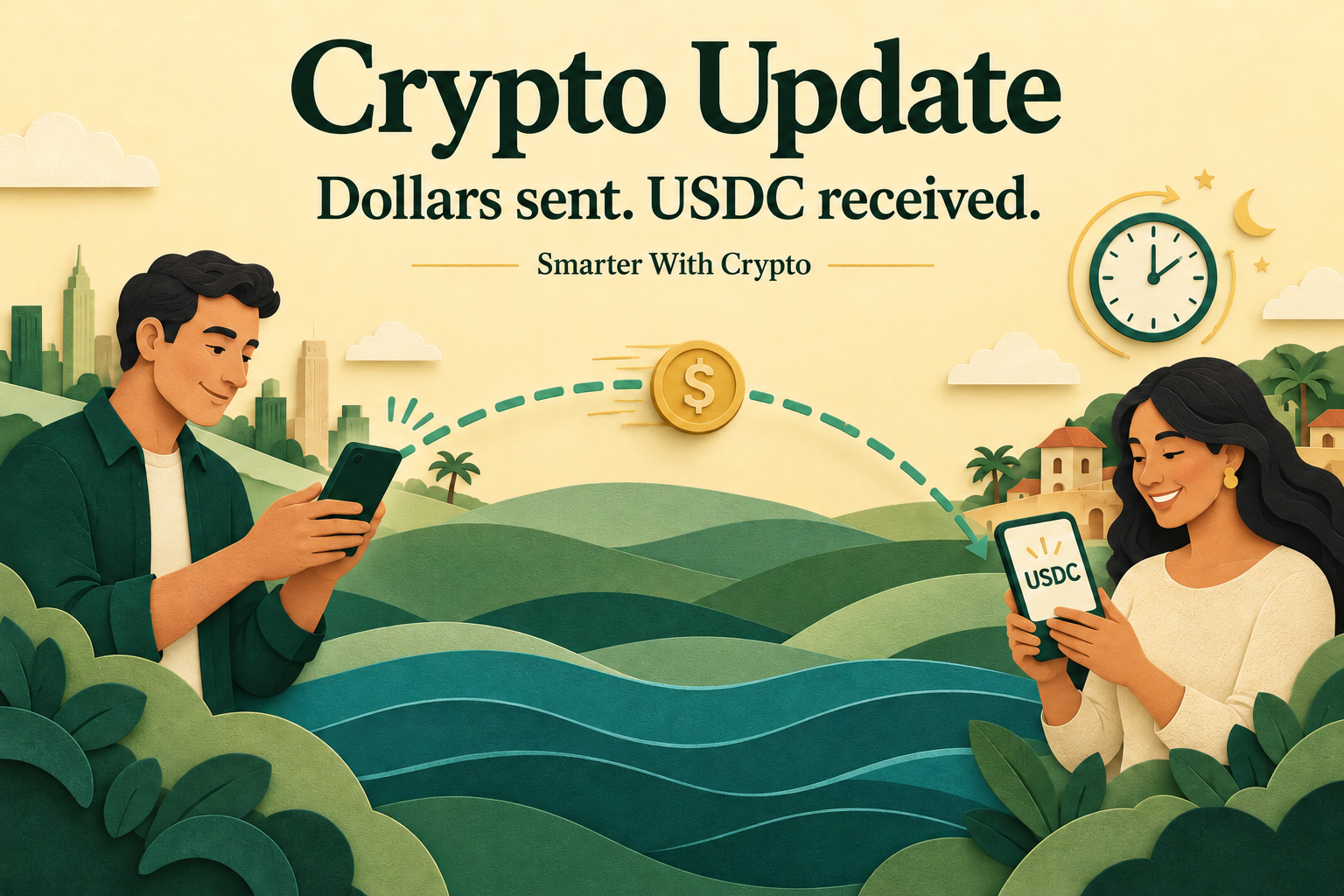
A new MAJORITY and zerohash announcement puts stablecoins inside a familiar task: sending money to family. The useful question is what arrives, and how the recipient can use it.
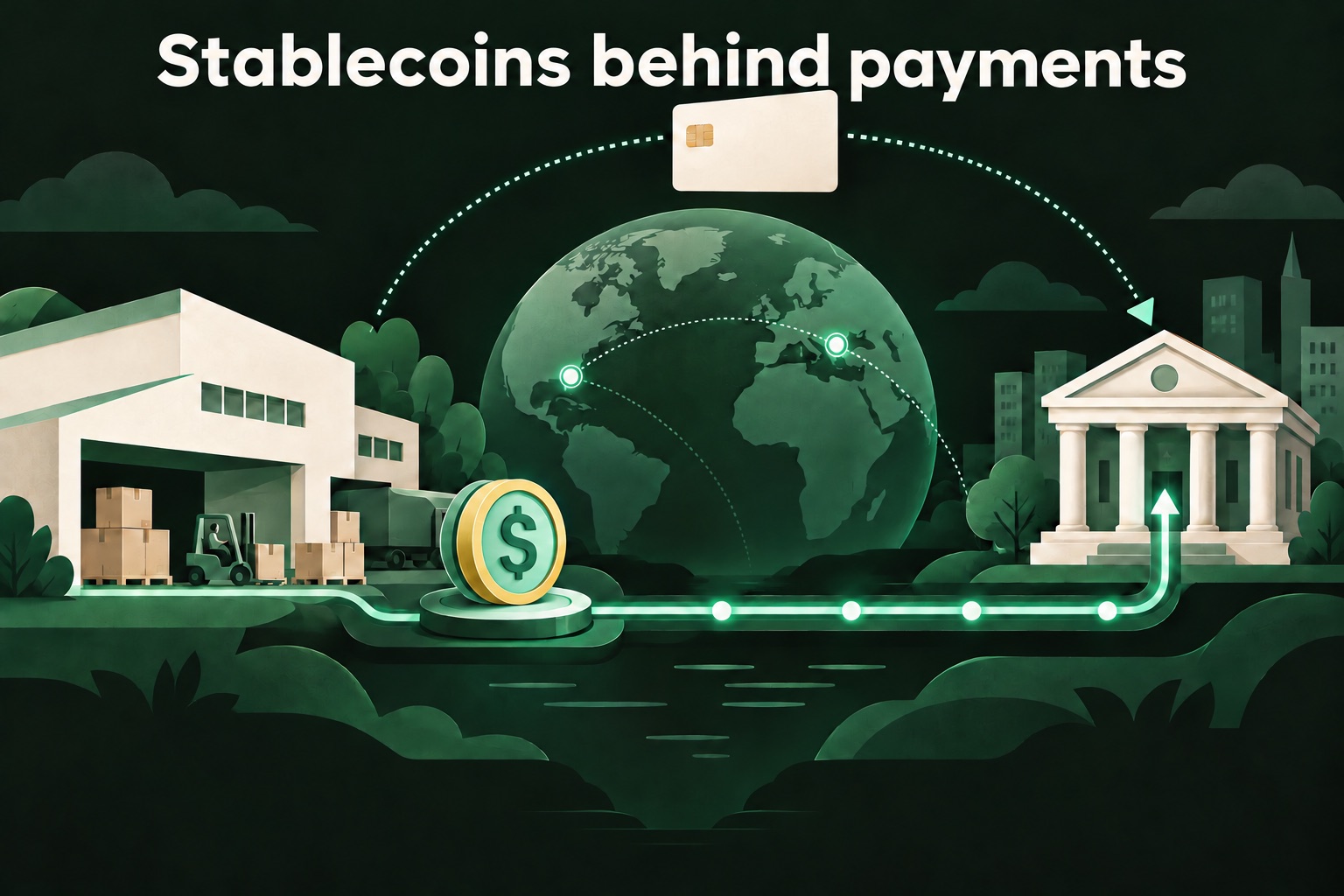
When you send money abroad, you care about when it arrives and what it costs. You probably spend less time thinking about how the payment company funds that transfer. That hidden step is where stablecoins can play a role.
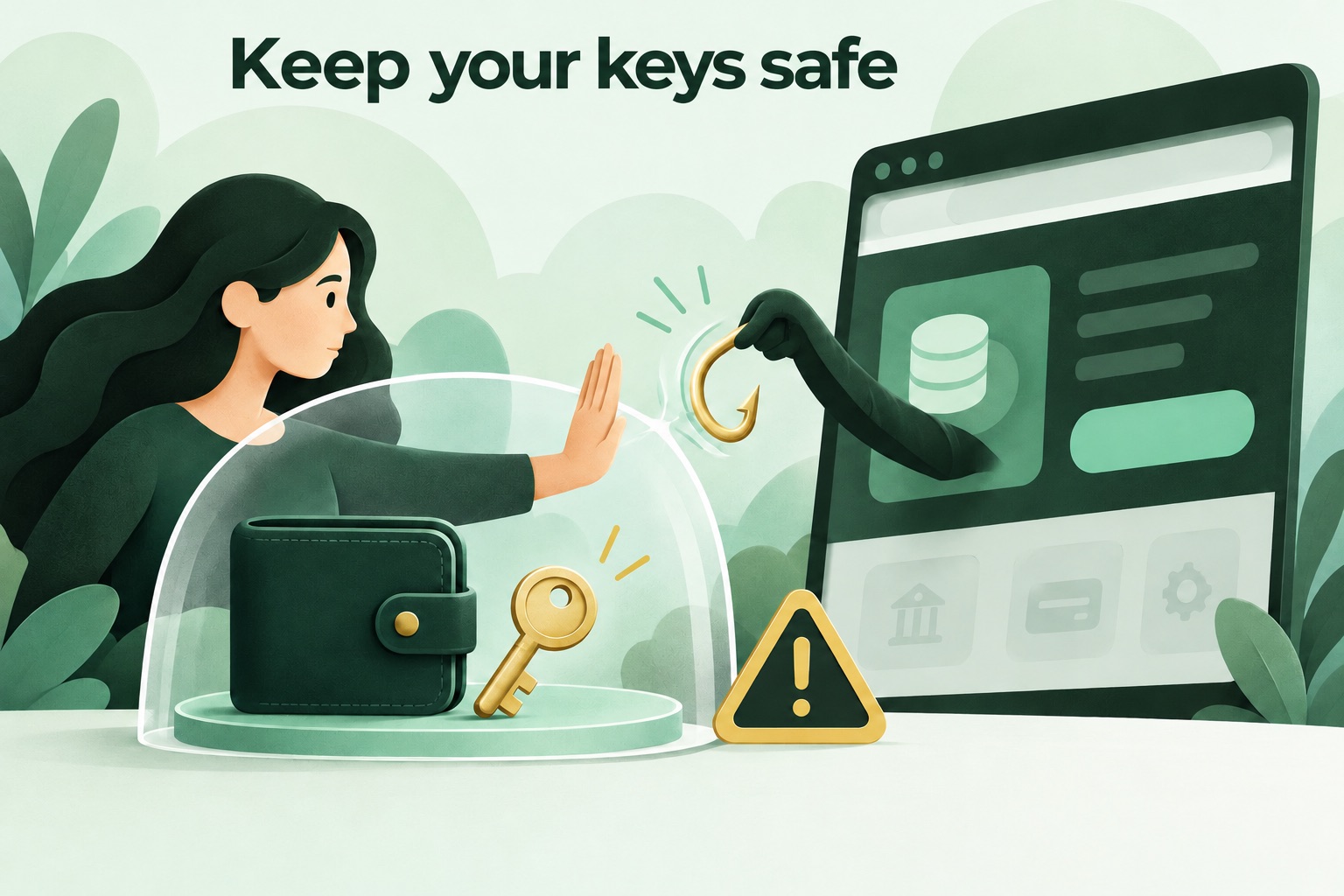
A promise to protect your money can sound reassuring. Before you trust an unfamiliar crypto service, take a moment to understand what it wants you to hand over. A useful question is: who would control my money afterwards?
You don’t need to become a technology expert to understand crypto. A few useful basics can help you ask better questions, spot mistakes and feel less rushed. WelcomeToWeb3 is a free, independent place to begin.