Getting Started
AI summarises a crypto project. What does it leave out?
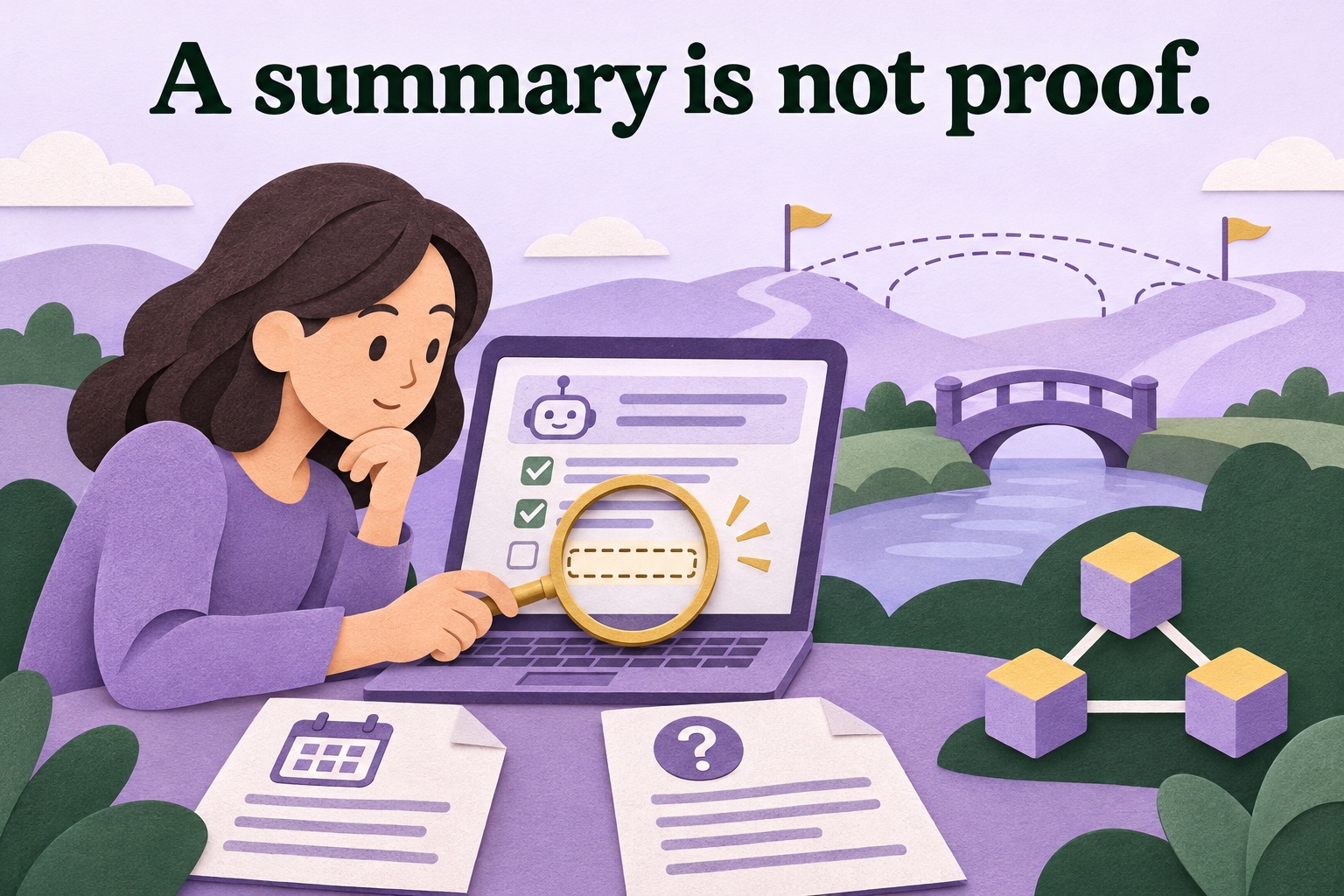
A long Web3 project document becomes a tidy answer in seconds. Useful, until “we plan to build this” becomes “this already works”. AI can help you read faster and ask better questions. To do that, its summary needs to keep limitations visible.
Choose what you want to find out
A whitepaper describes a project’s ideas and approach. A roadmap lays out planned steps. Neither automatically provides current operating instructions or proof that every mentioned feature is available. Even ethereum.org warns that the original whitepaper no longer reflects everything Ethereum is today.
Rather than asking whether a project is interesting, choose a practical question: can I use the product yet, what conditions apply, or what does a token actually give me? AI then becomes a reading aid for your question, instead of a machine tasked with producing a convincing story.
Give sources names and dates
Open the official documentation yourself. Record the title, version or date, and link. Then give AI only relevant public passages. Identify which text is an older explanation and which page contains current conditions of use. Keep missing dates explicitly marked as unknown.
Also check whether your AI tool can actually open the link. An answer about a URL does not prove the page was read. If opening does not work, paste a short passage you are allowed to share. You do not need wallet secrets, private screenshots or personal account details to understand a public project document.
A fictional project: Haven
Suppose an invented project called Haven says token holders will eventually vote on important decisions. Its current guide only describes an invitation-only test environment. A careless summary might turn that into “holders govern the platform”.
That sounds more attractive, but drops two conditions: voting is still a plan and the current test is not open to everyone. Ask AI to place those sentences beside their supporting passages. The useful conclusion remains limited: the documents describe an ambition and a restricted test. They do not establish a general voting right or an available product for you.
Think of a property brochure showing a future tram stop. The stop could matter, but you cannot board a tram there today. Shortening a text must not erase the distinction between now and later. With a token, leaving out a condition can similarly change what you expect to receive.
Try this focused instruction
For example: “Use only these two texts. For each claim, show its source passage and date. Separate currently available features, plans and unclear points. Preserve conditions and exceptions. Identify missing information without filling it in. Do not give purchase advice.”
This makes the output easier to check; it does not guarantee a correct answer. Anthropic recommends allowing uncertainty and checking claims against source passages, among other techniques. Read the important passages yourself. Even a neatly presented quotation can be attached to the wrong claim or leave out relevant context.
Keep the question mark when sources disagree
An old roadmap promises open access, while a newer guide describes a waiting list. Ask AI to retain both statements and their dates. Do not automatically choose the more appealing version. The newer text may matter for current access, but check whether it concerns the same product and user group.
Then write one specific question for the project: who can use this feature today, and where are the current conditions? A missing answer is useful information. It is better to postpone a decision than let AI fill a gap with a plausible explanation that nobody has supported.
What is the financial benefit?
The possible benefit lies in saving time and avoiding mistaken expectations. You may notice sooner that a feature is not ready, a right is limited or additional conditions apply. That can help you avoid an unnecessary purchase. It does not predict a token price or prove a project is safe.
Keep your checked notes with a date. Start small: one question, two public sources and three conclusions carrying evidence or a question mark. You do not need to buy a token to practise. Our free quizzes then help you distinguish an appealing promise from a decision supported by evidence.
Original sources & further reading
- Anthropic — Reducing hallucinations and checking source passages
- Ethereum — Original whitepaper and its limits today
Sources checked on .